Searching for gold in the Yao is a sign of poverty and a risk to the river
Improvised extraction in Granma promises quick income but exposes workers and ecosystems when controls, alternatives and information about the methods used are absent.
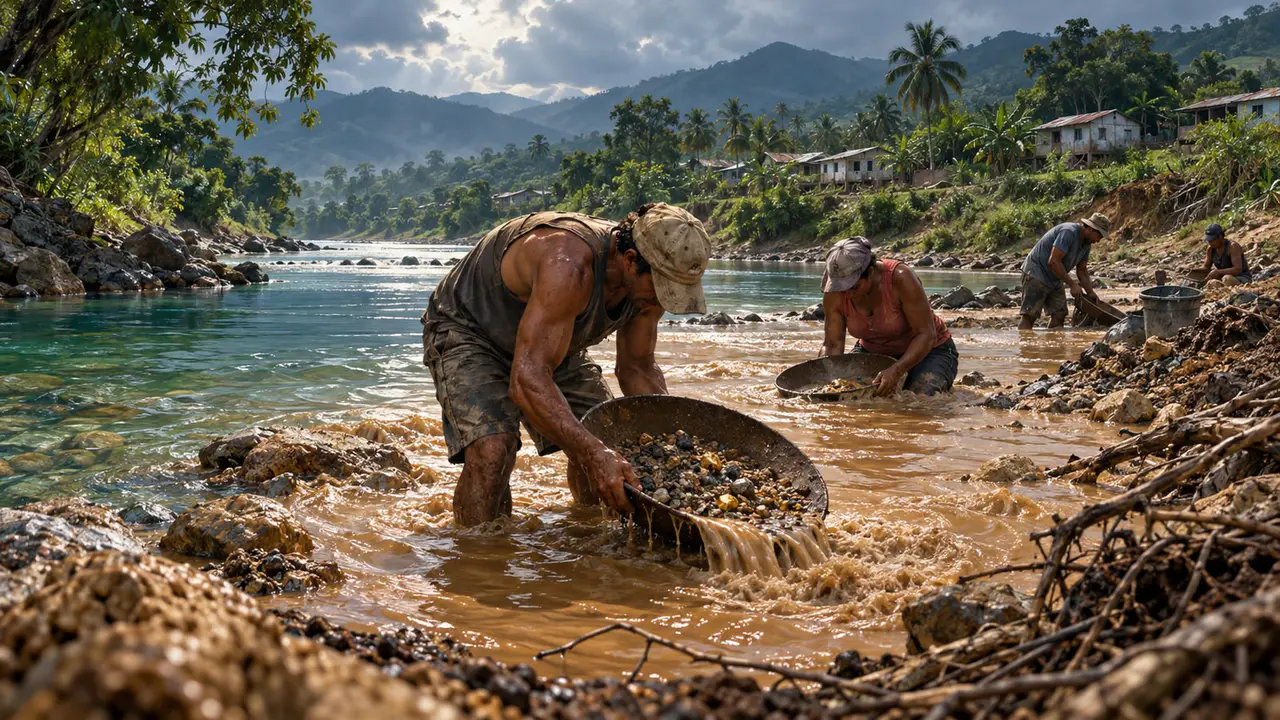
Dozens of people gathered in the Yao River between Bayamo and Buey Arriba, Granma, to search for gold. Images that circulated show participants moving rocks and sediment in the riverbed. The scene documents a collective search and the visible manual method, but it does not confirm that gold was found or establish how much mineral might be present in the area.
The episode gained momentum after a rumor of a possible discovery circulated. The available information links that expectation to the gathering and the possibility of earning income. A rumor, however, is not geological confirmation: the available data include no river analysis, verified samples or search results. The difference between a report that draws a crowd and a confirmed discovery is central to assessing what happened.
José Daniel Ferrer shared images showing many people working in the water and along its banks. The visual record provides context about the gathering but has limits: it cannot by itself establish how long the activity lasted, the exact number of participants or what they found. No independent assessment of the site is provided either. What can be observed should be distinguished from claims that remain uncorroborated.
The area has a history connected to mining and gold prospecting, according to the published information. That context helps explain why the idea of searching for the mineral is not new, although no dates or details of earlier episodes are provided. The available data do not establish organized or continuous extraction. What is confirmed is limited to the recent search and a general reference to local precedents.
Manual removal of rocks and sediment can alter a riverbed if carried out extensively or without controls, but no study documenting damage to the Yao has been provided. There is also no information on substances used, water quality, erosion or effects on the banks. Presenting a specific impact as fact would be premature; the lack of measurements nonetheless leaves an unresolved environmental issue that deserves evaluation.
The presence of dozens of people turns a localized search into a practical matter for the community and authorities, although the information describes no official intervention or rules applied at the site. It is unknown whether permits, supervision or safety instructions existed. That lack of information prevents a legal classification of the activity and an assessment of specific risks to people who entered the river.
The expectation of earning income appears among the motives attributed to participants in a context one source links to the economic crisis. That connection helps explain the appeal of a quick-gain opportunity but does not establish what motivated each participant or measure their employment situation. The search raises questions about local economic options; the images do not answer them by themselves.
The assessment will depend on clarifying facts that remain unknown: whether gold was found, which methods were used, what effects sediment removal had and which rules govern the activity along that stretch. A public response based on inspections and environmental data could distinguish a spontaneous gathering from a more persistent practice. For now, the evidence confirms the search in the Yao River, not a discovery or a specific environmental harm.