Solidarity between provinces cannot replace a supply system
Aid coordinated by Caritas from Pinar del Río for families in Artemisa relieves real needs but also shows how much households depend on extraordinary networks.
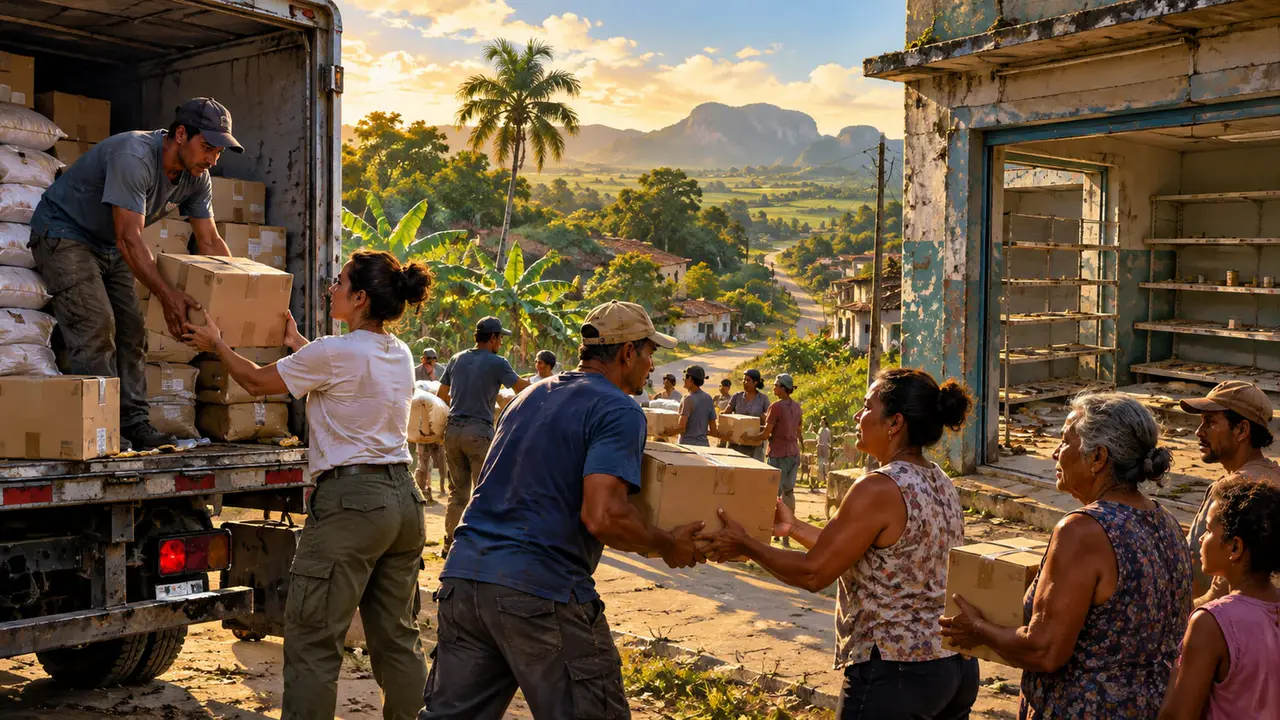
The arrival in Havana of humanitarian assistance sent from the United States again highlights the role of religious networks in meeting needs beyond the capacity of a single delivery. Representatives of the diocese and the charitable organization coordinating distribution received the shipment. Its announced destination is not Pinar del Río Province, but two Artemisa communities belonging to that ecclesiastical jurisdiction.
Candelaria and Quiebra Hacha are the designated distribution sites. The difference between administrative boundaries and diocesan jurisdiction explains why an entity associated with Pinar del Río assists communities in Artemisa. A later report said initial deliveries reached six rural communities in Candelaria, although available information does not detail the full progress in both destinations.
Communications first described a planned delivery and later reported initial distribution in Candelaria. That sequence supports saying distribution began there, not that it concluded or that every selected household received supplies. No final accounting compares families assisted with the total number needing support.
Volunteers made home visits to identify people needing greater attention. Published criteria include advanced age and living alone, pregnancy or nursing with identified risks, young children in precarious conditions, and disability or dependence because of illness. Targeting seeks to allocate scarce resources, but published information does not reveal how many requests were excluded.
The shipment contains 700 food packages and the same number of hygiene kits. That figure describes supplies, not necessarily households served: sources do not explain how products are distributed within each family or whether every package has the same destination. The published list includes staples, hygiene articles and water-treatment products.
The delivery forms part of a $100 million humanitarian program announced in May 2026. Available information says $60 million is channeled through Caritas Cuba and Catholic Relief Services, while the rest goes through independent organizations. The U.S. entity purchases the products, and diocesan and parish networks bring them to communities.
That mechanism mobilizes aid without relying on a single local organization, but it does not eliminate questions about continuity and scale. One shipment can relieve immediate needs while leaving persistent shortages of food and hygiene products unresolved. Emergency solidarity is essential; it is not by itself a guarantee of regular supply.
Assessing the real reach requires data absent from current reports: how many households received support, what share of supplies reached each locality and whether new deliveries will follow. It also matters how beneficiary lists are updated and what happens to those excluded from this selection. Without that information, the impact is only partially understood.
Cooperation among provinces, parishes and humanitarian organizations demonstrates community capacity while revealing its limits: it depends on donations, volunteers and specific operations. Solidarity can complement an effective supply policy, not permanently replace one. The practical challenge is ensuring urgent aid arrives transparently and the needs behind it receive stable responses.