
Cubans expect to leave pork off their year-end dinner tables
Shoppers cite prices as high as 2,200 pesos per pound at locations in Havana and are considering other foods for their family celebrations.
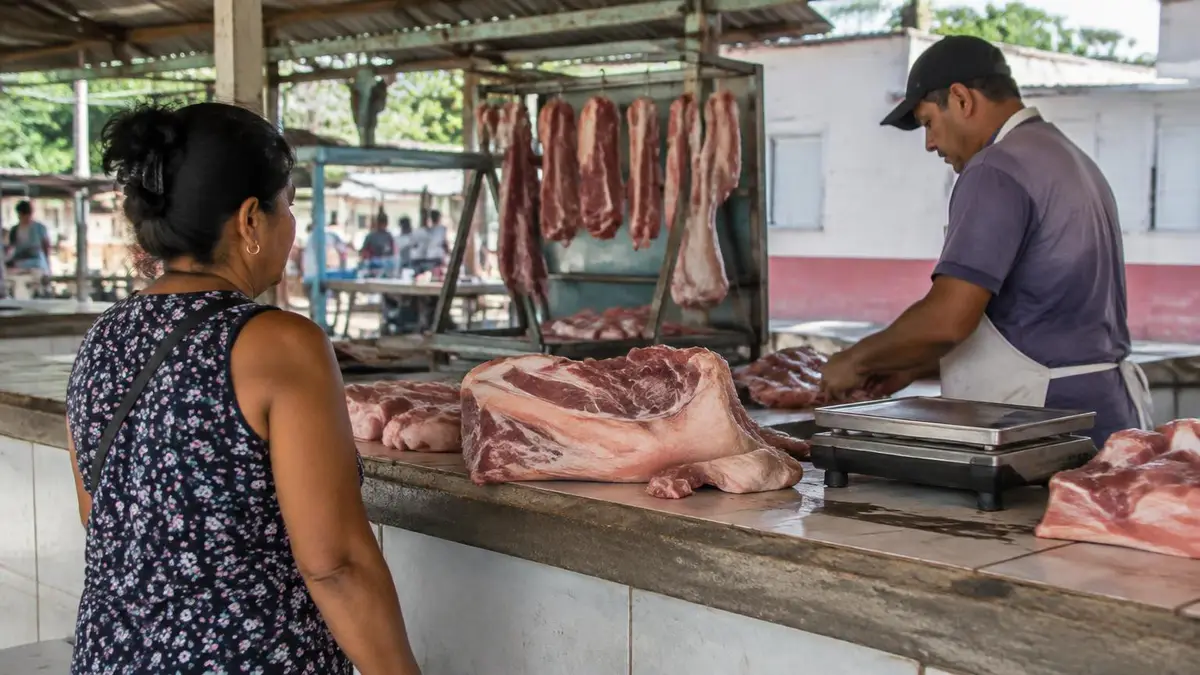
Cubans on social media said the price of pork is making it difficult to include the meat in family celebrations in December. The conversation began after a Cienfuegos page mentioned a price of 1,700 Cuban pesos per pound on Facebook. Responses included accounts of higher prices and comments from people expecting to end the year with a dinner that does not include pork. They questioned who would be able to buy it for the occasion.
Shoppers cited prices of 1,800 and 1,850 pesos in different communities. One participant put the price per pound in Santa Fe at 1,900 pesos; others cited 2,000 in San Antonio de los Banos and as much as 2,200 at certain Havana establishments. These are prices reported at specific points of sale, not a national rate. By comparison, an agricultural fair in Sancti Spiritus sold pork for 850 Cuban pesos per pound in August, below those amounts.
A five-pound purchase illustrates the expense involved in preparing dinner: at the price cited in Cienfuegos, the cost would be 8,500 pesos; at the Santa Fe price, it would rise to 9,500. In both cases, the budget covers the meat alone. Whatever side dishes each family chooses would require additional spending not included in those amounts for the main course or in the 1,000-peso difference between the two purchases.
For comparison with household income, the monthly minimum wage has been set at 3,210 pesos since July 2026. The official average for January through April was 7,074 pesos. The comments also included memories of earlier purchases: one person said pork had cost 25 pesos per pound before the currency overhaul. That reform began in January 2021 and eliminated the convertible peso to unify the currency, in a period subsequently marked by inflation.
Responses included possible changes to family menus. Some participants proposed serving chicken instead of pork, while another imagined a meal of fried eggs, rice and a root vegetable. Those remarks reflect personal plans for coping with December expenses. Other users lamented the possibility of once again going without the dish they traditionally shared during the holidays and recalled being able to serve pork to their children several times a week in the past.
The concern centers on a tradition with roots in Spain's colonial period. In Cuba, roast pork has a prominent place at both Christmas Eve and New Year's Eve meals, alongside congri and dishes such as cassava with mojo or fried plantains. For decades, the meal has been associated with abundance and family gatherings, even during periods of scarcity; the current comments reflect the difficulty of keeping that tradition on the table.