
Florida offers residents a free shoreline fishing license
The permit covers recreational saltwater fishing from land but does not allow fishing from a boat and is not available to visitors.
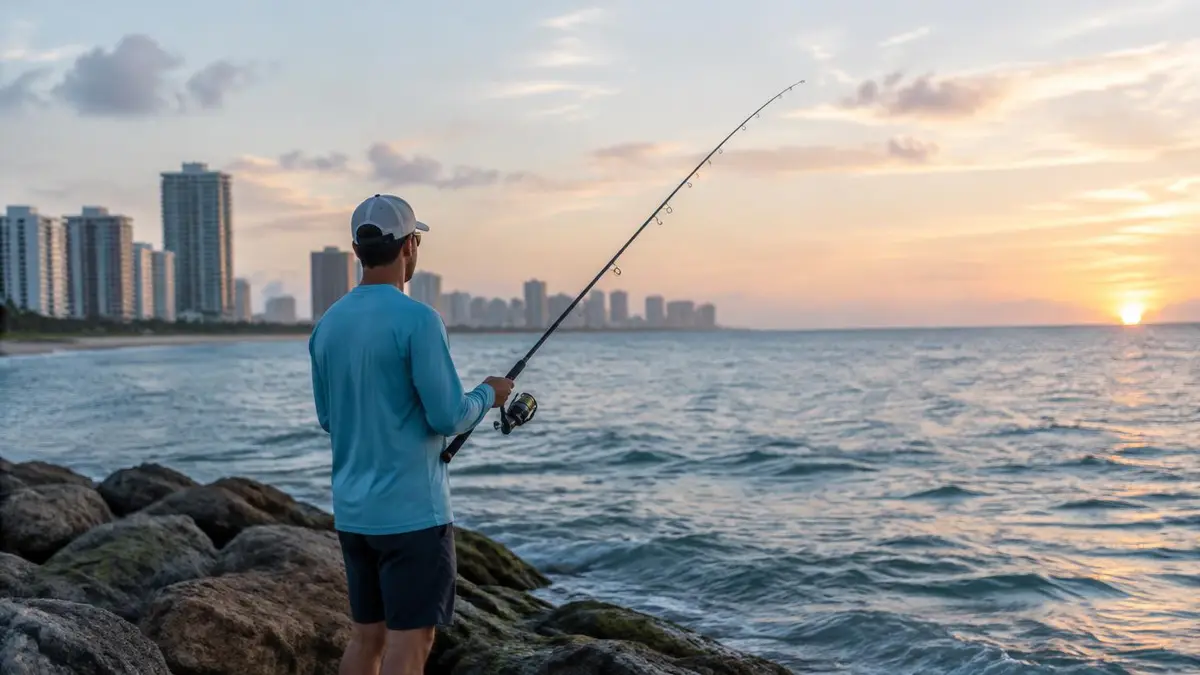
Florida residents can obtain a state license at no cost for recreational saltwater fishing from shore. The permit is limited to people who meet Florida residency requirements and allows fishing from land or from structures attached to land. Its scope is narrower than a general saltwater license, so the location and method of fishing determine which permit is required.
The permit is called the Resident Saltwater Shoreline Fishing License. It does not cover fishing from a vessel, so holding the free license does not authorize casting from a boat. It does cover fishing from land and structures fixed to it. The distinction matters for people who alternate between the shoreline and boat outings, because the two methods are not covered by the same authorization.
For residents who need a license covering both shore and vessel fishing, the stated annual fee is $17. That saltwater permit includes both methods, while the no-cost option is limited to fishing from land or structures connected to it. The free permit should therefore not be confused with the annual license that also allows fishing from a boat.
Visitors cannot apply for the free shoreline license even if they plan to fish only from a beach. The residency condition applies to that permit and does not disappear when a person selects a fishing point on land. People who do not satisfy the requirement cannot use this option; the available information distinguishes that restriction from the $17 annual fee established for residents.
The shoreline license also does not replace additional permits that may be required for certain species. The free authorization therefore has limits both by type of activity—it does not cover boat fishing—and by rules applicable to specific catches. Before fishing, a person should determine whether the outing will be from land or a vessel and whether the target species requires a separate permit, avoiding confusion between different types of coverage.