
Garbage blocks streets in Havana despite announced measures and equipment
The lack of fuel and the shortage of operational trucks prolong the accumulation of waste; neighbors and activists denounce a deterioration that reaches different neighborhoods.
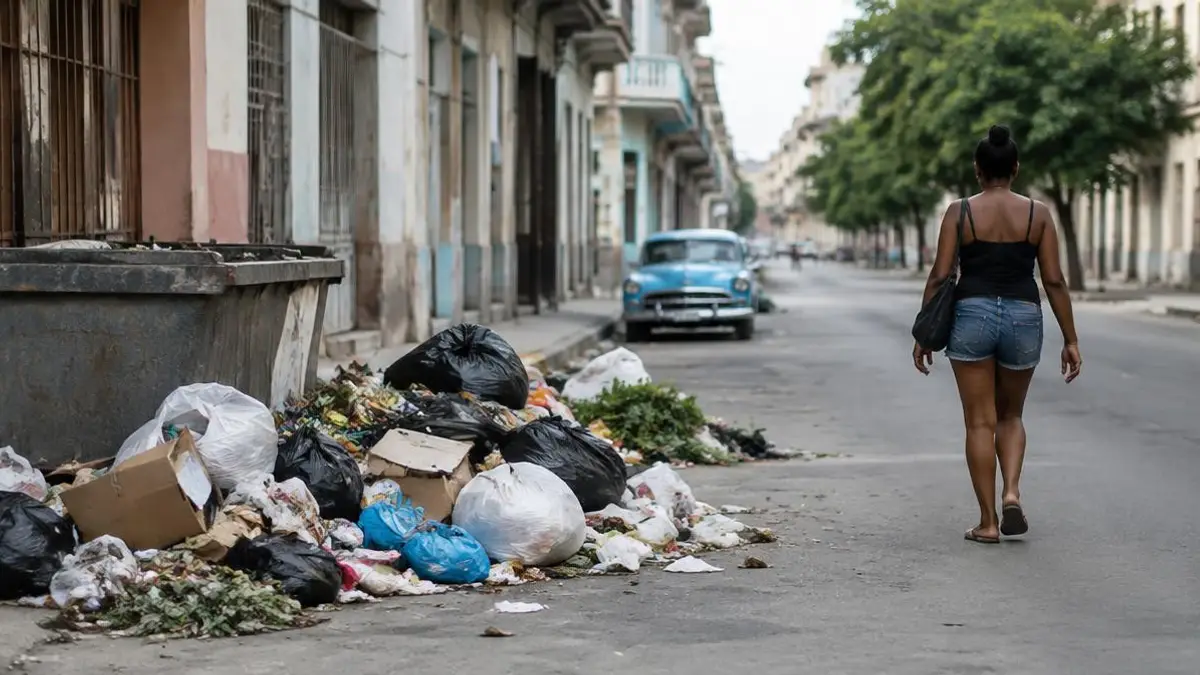
The accumulation of garbage keeps streets and public spaces in Havana blocked, where waste is piled up next to homes, cultural centers and hospitals. In Vedado, near the Dulce María Loynaz Cultural Center, mounds of up to one and a half meters and overflowing sewage were recorded. Waste has also been reported in front of the William Soler University Pediatric Hospital, in Boyeros, and in other areas of the capital.
Activist Radimir Galán has released images of several affected points and maintained that the waste crisis has worsened. According to his testimony to the media, collection deadlines have been extended and some roads remain closed for weeks. Neighbors and activists attribute the delays to truck breakdowns and lack of fuel, which prevent the removal of the daily volume of garbage.
At the beginning of this year, of just over a hundred collection vehicles, only 44 were operational, while Havana generates around 30,000 cubic meters of waste per day. In 2023, authorities acknowledged that less than 40% of the capital's cleaning teams were working and that they did not have a figure on the number of containers that were needed. The lack of resources has also affected the cleaning of sidewalks and parks, according to Galán.
In February, the government announced 49 measures to deal with the problem, but reports of garbage accumulation continued in neighborhoods such as Boyeros, Centro Habana, Luyanó, San Miguel del Padrón and Old Havana. In September, 20 trucks and other equipment of Chinese origin were presented, with the capacity to transport up to ten tons. The authorities indicated that these vehicles would not solve the situation on their own.
Since July, El Rampeño, a private project, has been using electric tricycles to remove waste in some neighborhoods, especially in Vedado. The service charges 100 Cuban pesos to homes and establishments such as restaurants, shops, markets and hotels. In October, official media proposed expanding the participation of private businesses and that neighbors pay that fee for each collection. Galán also pointed out that teams from the Armed Forces participate occasionally, especially in the face of important events, but do not provide a regular service.
Garbage also accumulates in areas with stagnant water, a condition conducive to the reproduction of the mosquito that transmits dengue. The William Soler Hospital faces, according to published information, saturated emergencies and shortages of medicines. The lack of diesel for collectors is part of a broader energy crisis, with prolonged power cuts in the capital. The city turns 507 years old on November 16, while its inhabitants continue to live with unremoved waste, water shortages and deteriorated buildings.