
Rubio conditions Venezuelan elections on reforms and points to 2027
The U.S. secretary of state is demanding institutional, economic and security changes before a vote, while relatives of political prisoners ask Washington to press for further releases.
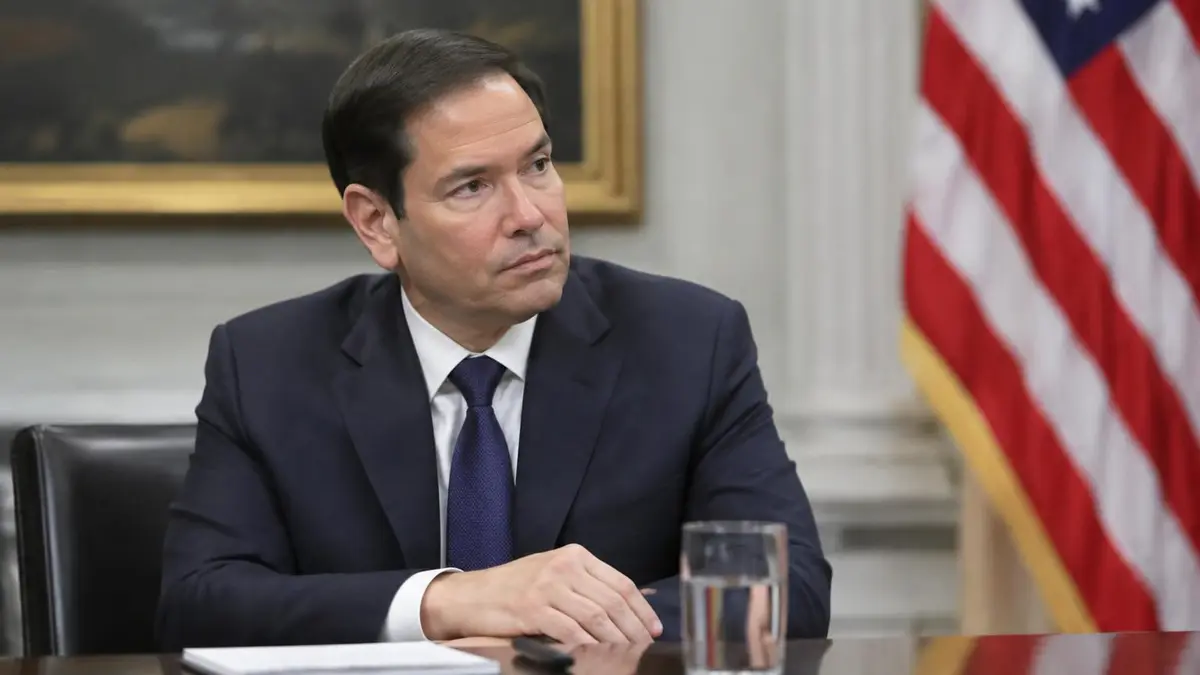
U.S. Secretary of State Marco Rubio said Thursday that Venezuela could hold elections in 2027, but he conditioned that prospect on prior changes to its institutions, economy and security. In a White House interview, he described that year as the desired scenario, not a guaranteed date. He also did not commit to holding the vote before Donald Trump's presidency ends. His priorities included renewing the judiciary and election authorities.
One week earlier, the Trump administration had backed the roadmap agreed upon by Venezuelan authorities and part of the opposition. Rubio expects the talks to allow changes to the Supreme Court by mid-December. Negotiators are also due to meet next week to discuss who will make up the electoral body. The agreement provides that, after the reforms are completed, Delcy Rodríguez should declare the presidency permanently vacant; that declaration would begin a six-month period for calling the vote.
On the economy, Rubio put Venezuelan debt above $200 billion and described it as an obstacle to reviving the economy and attracting capital. He called for support across social sectors to resolve the problem. He also expressed U.S. interest in eventually reaching an agreement that would provide a legal basis for a military presence, without presenting that proposal as a completed deal.
María Corina Machado also spoke Thursday about Venezuela's political future. From Buenos Aires, she joined by video the ceremony at which Siglo 21 University in Córdoba awarded her an honorary doctorate. The opposition leader, winner of the 2025 Nobel Peace Prize and leader of Vente Venezuela, argued that innovation should guide economic and institutional reconstruction after a new government is elected. She also said the transition was advancing.
While the election calendar is being discussed, a group of relatives continues to demand releases outside the U.S. diplomatic mission in Caracas. Members say they have been there for about 150 days and are seeking intervention from the Trump administration. The organization Foro Penal counts 322 people imprisoned for political reasons in Venezuela. Mayra Morales, sister of Ricardo Fonseca, said they will continue their demands until the last detainee is freed.
Morales accused acting president Delcy Rodríguez of failing to carry out the releases that, she said, Rodríguez claims to the United States are taking place. Another relative, María Altagracia Spiezia Vásquez, sister of José Alberto Vásquez, demanded justice for people who, she alleged, died in state custody. Her appeal included relatives who, she said, died without seeing their loved ones released. Both interventions centered on detainees and their families.
On Monday, Rubio had asked Venezuelan Foreign Minister Oliver Blanco to continue releases, according to a statement about their meeting. Rodríguez said in August that 1,046 Venezuelans had left prison since January 2026. Separately, an amnesty approved in February by the Chavista-controlled legislature reached more than 8,000 people, most still under restrictions despite being outside prison. The interim government maintains that the imprisonments concern crimes and denies they are political, a position challenged by organizations and opposition parties.