
PCC ideological official leads Cuba's delegation at Beijing media summit
The delegation called for broader access to artificial intelligence at a gathering of nearly 500 participants addressing technological inequality.
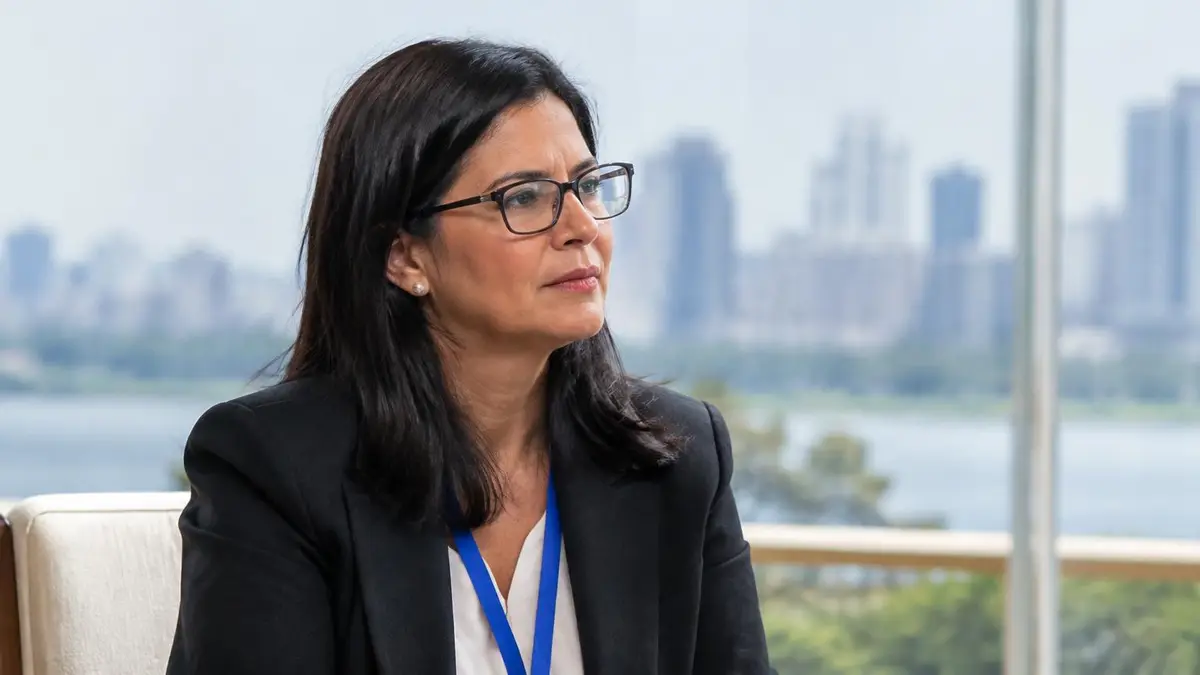
Liudmila Alamo Duenas, deputy head of the Ideological Department of the Communist Party of Cuba's Central Committee, is leading the Cuban delegation at the 7th World Media Summit in Beijing, which officially opened Saturday. The gathering brings together nearly 500 participants from about 330 media organizations and institutions representing 112 countries. The program began November 5 and is scheduled to conclude November 9.
Alamo Duenas traveled with executives from Cuban state media, including Alejandro Gomez, Randy Alonso and Yuniel Labacena. Among the responsibilities of the party department to which the delegation head belongs is providing editorial direction to the state-run press, radio and television. Labacena connected the meeting's importance for the Cuban participants to the economic, editorial and technological changes their organizations are undergoing.
In his remarks, Gomez called for investment in infrastructure, training and digital resources for countries in the Global South to prevent greater technological inequality. He also presented the gathering as a way to explore cooperation agreements, particularly with Chinese counterparts, and to learn about advances in artificial intelligence. Alonso argued that access to this technology should not depend on the wealth of countries or media owners, and said automated tools do not replace human sensitivity or journalistic work.
The agenda includes artificial-intelligence applications for communication, mechanisms for technological exchange and debates about algorithmic transparency. During the opening, Li Shulei, head of China's Publicity Department, called for the benefits of the technology to reach every nation rather than remain limited to the most powerful sectors. The event also featured the official presentation of a bionic humanoid robot designed to work as a news anchor.
Cuba's Constitution, approved in 2019, excludes private ownership of mass media. That provision is accompanied by the Social Communication Law, in effect since June 2024, which limits legal recognition to media connected to the state, the PCC or mass organizations. This is the regulatory framework within which the organizations represented by the delegation in Beijing operate.
Reporters Without Borders denounced the detentions of Adelth Bonne Gamboa and Camila Acosta before the meeting, on November 2 and the following day, respectively. It also reported Yoani Sanchez's arrest on November 5 and her release about nine hours later. The organization ranked Cuba 160th out of 180 countries in its 2026 index.