Nearly empty hotels leave an open account of Cuba’s priorities
Low occupancy attributed to Gaviota properties requires comparing tourism investment with housing, energy, water and food that remain scarce.
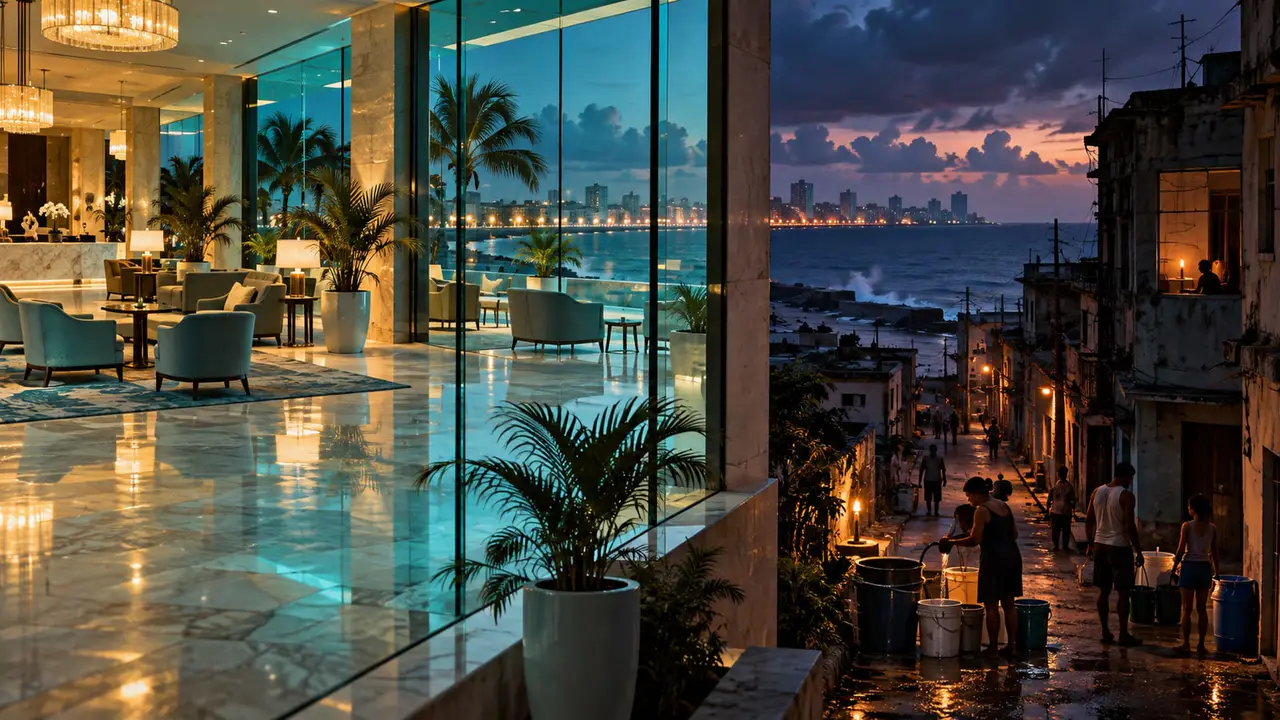
Gaviota reported having 3,470 rooms available against a declared inventory of more than 30,000 in Cuba. Comparing the two as a measure of capacity means roughly one in nine rooms would be in service. The gap is revealing, although by itself it does not explain why the rest remain inactive or what maintaining them costs.
The company concentrates its offering in Havana, Varadero, Topes de Collantes and Cayo Santa María. Sales director Elia Elena Cortés presented that concentration as a way to secure supplies and better serve guests. That is the company’s operational explanation, not an independent assessment of the decision’s efficiency or financial results.
The announcement comes amid a sharp tourism decline. Cuba received 450,353 international visitors from January through August 2026, 64.4 percent fewer than during the same period a year earlier, according to figures cited in the available material. The number helps explain pressure on the sector but does not by itself prove that the contraction has one cause.
In that setting, Gaviota announced the October 23 reactivation of Playa Luxury Varadero, an 85-room adults-only property on Cayo Libertad at the end of the Hicacos Peninsula. This is not new construction: the hotel originally opened in 2005 and is now being presented as part of the company’s high-end offering.
Reopening a property may reflect an effort to attract visitors seeking higher-priced services, but the released information provides no occupancy forecast, expected revenue or startup cost. Without those elements, it is impossible to measure whether the hotel will be profitable or ease the group’s difficulties. A luxury label describes positioning; it does not guarantee demand.
The editorial tension is not to claim that a high-end hotel is senseless whenever social needs exist, but to demand that the investment be assessable. Comparable figures on spending, maintenance, debt, revenue per room or results by property are unavailable here. Without disaggregated data, discussion of priorities is reduced to announcements and partial estimates.
Reports on Cuban tourism also mention supply, energy and air-connection difficulties and the departure of international operators. Those factors form part of the reported context, but sources do not quantify their specific effect on the 3,470 open rooms or explain how much each obstacle contributes to closure decisions.
The difference between declared capacity and active supply requires specific answers from the company and authorities: which properties could reopen, what resources they need and which indicators will be used to evaluate the season. It should also be clarified whether concentration is temporary or reflects a lasting change. Without answers, it is impossible to determine whether this is effective adaptation or contraction without a verifiable public plan.
The announced hotel reopening neither invalidates the scale of the problem nor proves that resources were diverted from other services. It does make explaining priorities with verifiable information more urgent. Publishing occupancy, costs and revenue by property would allow the tourism strategy to be compared with social needs and show whether available capacity produces benefits proportionate to the effort required to maintain it.