Opening oil to private companies does not create capital where none exists
New rules allow applications for hydrocarbon concessions, but the real obstacle will be financing expensive projects under political risk, sanctions and state control.
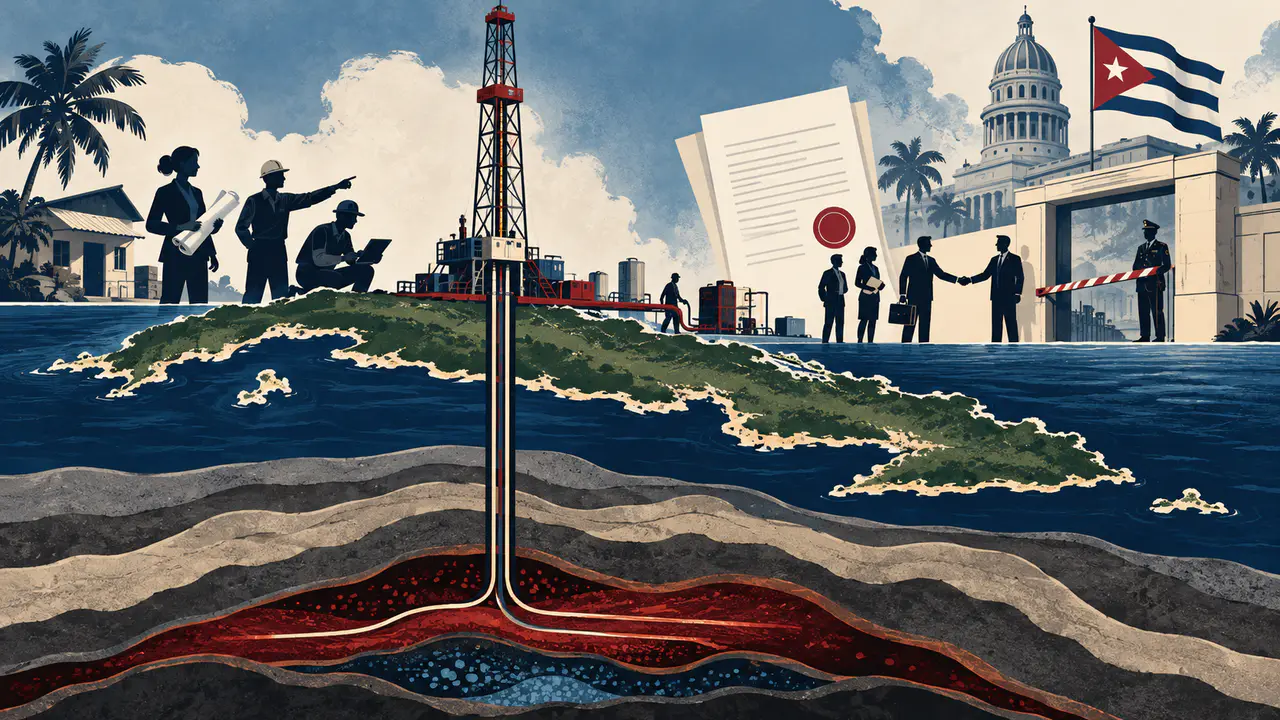
Decree-Law 135 on Oil and Gas and its implementing regulation, Decree 184, formally open new routes for private participation in hydrocarbon exploration and production in Cuba. Published in the Official Gazette on October 12, 2026, the measures take effect on October 19 and update a framework that included laws from 1938 and 1959.
The regulation includes micro, small and medium-sized enterprises, Cuban private companies with more than 100 workers and nonagricultural cooperatives among entities that may seek participation through concessions. It is not automatic permission: applicants must demonstrate technical capacity and submit documentation to the National Mineral Resources Office.
The office has up to 45 calendar days to issue an accreditation certificate when appropriate. That period concerns the applicant’s initial evaluation, not the award of a field or the start of extraction. A concession also requires state approval, so passing one administrative stage does not ensure that a project will operate.
The framework provides concessions lasting up to 30 years, extendable by another ten, and production-sharing contracts of up to 40 years with a possible ten-year extension. Concessions are normally awarded through open bidding, although restricted procedures are permitted in exceptional circumstances. The range of instruments broadens legal options but does not remove state decision-making over projects.
Ownership of deposits remains with the state, which the statute defines as socialist property of the whole people. The new space for private companies is contractual participation, not transfer of underground resources. That distinction matters in understanding what rights an operator may acquire and what conditions must appear in each agreement.
The main barrier does not appear to be only the legal ability to apply. Oil exploration requires investment, technology and capacity to sustain lengthy operations; experts cited in the material warn that Cuban private companies have limited financial capacity and that U.S. sanctions restrict access to capital and technology. Regulatory authorization alone does not solve those obstacles.
Questions also remain about how much room a private partner will have within a chain controlled by state entities and decisions requiring high-level approval. The rules establish procedures and provide for publication of concession agreements, but available information does not show how selection standards will be applied or which criteria will govern each case. Transparency will be central to measuring whether the opening is effective.
The new provisions announce neither a selected company, a commercial discovery nor an immediate production increase. Accreditation, concession, exploration and hydrocarbon production are distinct stages, and the 45-day period covers only one. Presenting the legal change as an imminent answer to fuel shortages would confuse a regulatory possibility with an energy result.
The practical test will begin with the first projects: who participates, how much capital they provide, which environmental commitments they assume, and what payment and accountability obligations they accept. Whether private participation extends beyond extraction to other parts of the chain must also be observed. Without concrete contracts and verifiable results, the opening will remain an institutional promise rather than a demonstrated energy source.