When a family drills its own well, the public network has already failed
Services starting at 500,000 pesos turn access to water into a private investment; the household response reveals inequality, health risk and failing infrastructure.
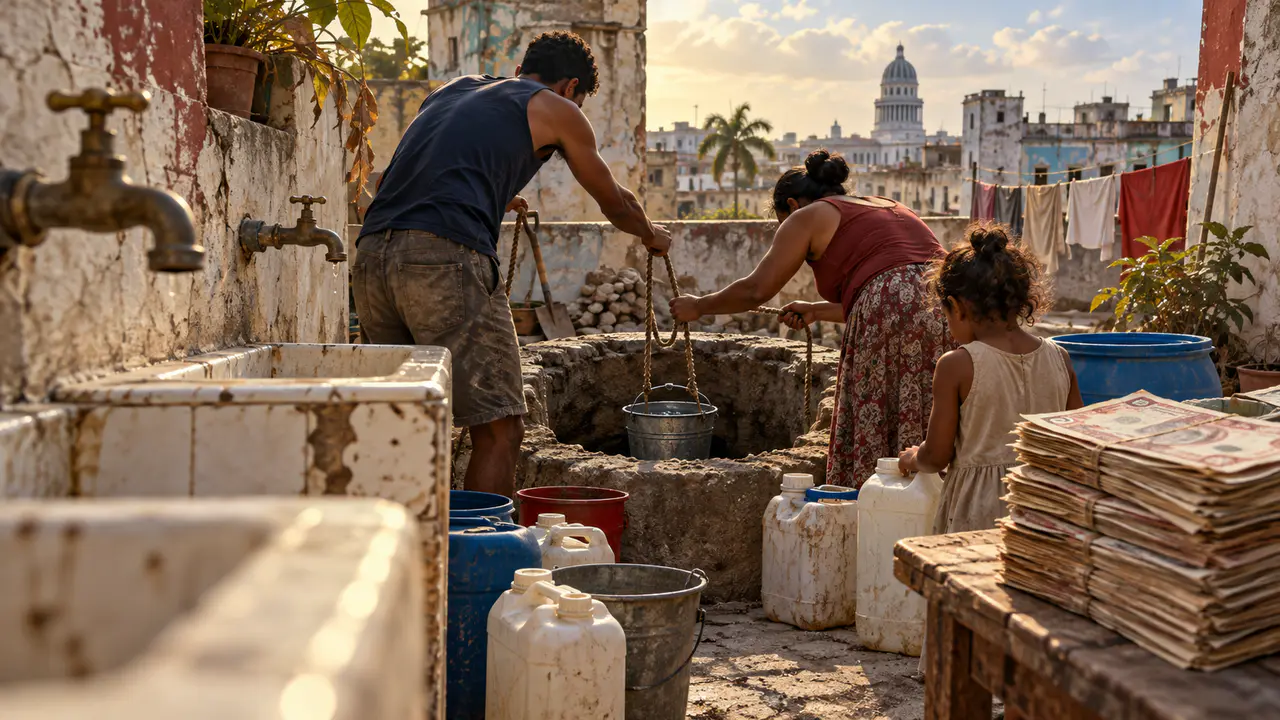
In Havana, some families are seeking water through hand-drilled wells because running water is unavailable. Services start at 500,000 Cuban pesos, according to the available information. The figure describes a private alternative amid supply problems but does not establish how many households use it or where they are concentrated. It supports describing a household response, not measuring its citywide extent.
A well shifts part of the effort to obtain a basic resource onto each family. For households able to afford the price and possessing a suitable place, it may be an option; for others, the initial cost may be beyond reach. The information provides no household-income data, so it cannot quantify exclusion, although the economic barrier is visible.
The 500,000-peso figure is a starting price, not necessarily the final cost of every job. The available record does not specify what the service includes, how terrain changes the price or what additional expenses may arise. Without those details, comparing estimates or calculating total investment is difficult.
Drilling a well does not automatically produce water safe for every use. The information does not say whether quality testing occurs, what health controls exist or what technical guidance families receive. Households need to know what checks are necessary and who can perform them. There is insufficient information to declare the wells either contaminated or safe.
The affected neighborhoods, drilling conditions and cause of missing running water in each case are also unidentified. There are no figures for interruptions, duration or available supply. The individual response cannot measure the public network's entire condition, but it shows families seeking alternatives amid shortages.
When access depends on a private purchase, solving a daily need becomes conditioned on resources that households do not share equally. Available information cannot compare incomes, prices or territorial distribution, but the public-policy question is not why families seek water; it is how to prevent that search from becoming the only answer to a collective problem.
Authorities could publish verifiable information about drilling conditions, water testing and consultation channels, as well as measures addressing interruptions. The material does not establish what permits, controls or services exist. Publishing local procedures and data would allow safer decisions.
A well may ease a household shortage but cannot replace a public network capable of providing regular, safe water. Assessing whether this response is growing requires data on households, locations and water quality, along with an institutional plan. Until those facts appear, 500,000 pesos marks the entry cost of a private alternative and the questions that remain open.