Otero Alcántara brought to the U.N. a question Cuba does not allow
After entering exile, the artist denounced political repression, ideological education and persecution of dissenting art; the response should be debate and rights, not erasure.
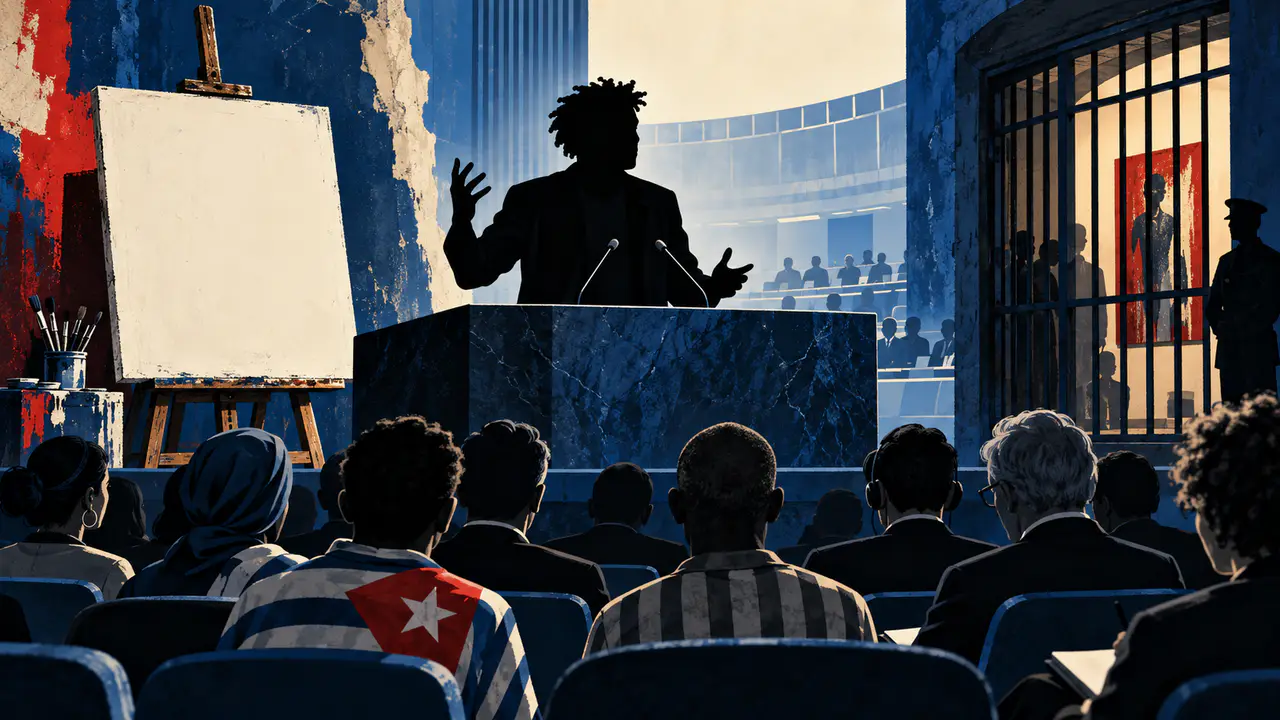
Luis Manuel Otero Alcántara addressed the United Nations after entering exile in the United States and presented a political denunciation of conditions in Cuba. He called the system a dictatorship and said the population lacks freedoms and faces repression. Those claims must remain attributed to him: they describe his intervention rather than independently proving every allegation.
The artist connected his political criticism with public and cultural life. He said alternatives to those in power are punished, education is conditioned by official ideology and dissenting artistic expression is persecuted. The breadth of those claims extends beyond a dispute over government structure.
The intervention took place at U.N. headquarters during an event bringing together former prisoners of conscience, opposition figures and experts. That setting gave the allegations international visibility, but appearing in a global forum neither automatically proves nor renders them irrelevant. Responsible reading requires listening and precise attribution.
His status as an exile is context, not proof for or against his arguments. Otero could express his positions outside Cuba after leaving the island. That raises broader questions about the cost of public participation, although the available material does not reconstruct every circumstance of his departure.
His history as a former political prisoner adds personal experience to the denunciation without replacing examination of each claim. Journalistic precision requires neither treating biography as complete verification nor dismissing it. Allegations concerning education, repression and art remain attributed and open to scrutiny.
Public response also matters. The material records Otero's statements and audience but includes no answer from Cuban authorities or independent information testing each point. It therefore does not support claiming that a reply or exchange occurred.
In cultural debate, disagreement should not be confused with whether a person may create or express a position. His allegation questions whether dissenting art can circulate without persecution, but the supplied content documents no particular cases or decisions. How such limits operate remains an open question.
The U.N. intervention expands a debate also addressed to Cuban society. Its informational value lies in making concrete allegations public and available for examination, not closing discussion. Progress requires verifiable answers, access to information and room for both critics and those who disagree. The material confirms the denunciation and its context but does not resolve every question.