When the power goes out, the tap also runs dry
More than 2.7 million people had disrupted water service in Cuba. Blackouts explain part of the emergency; breaks and deteriorating networks prevent treating it as an exclusively electrical problem.
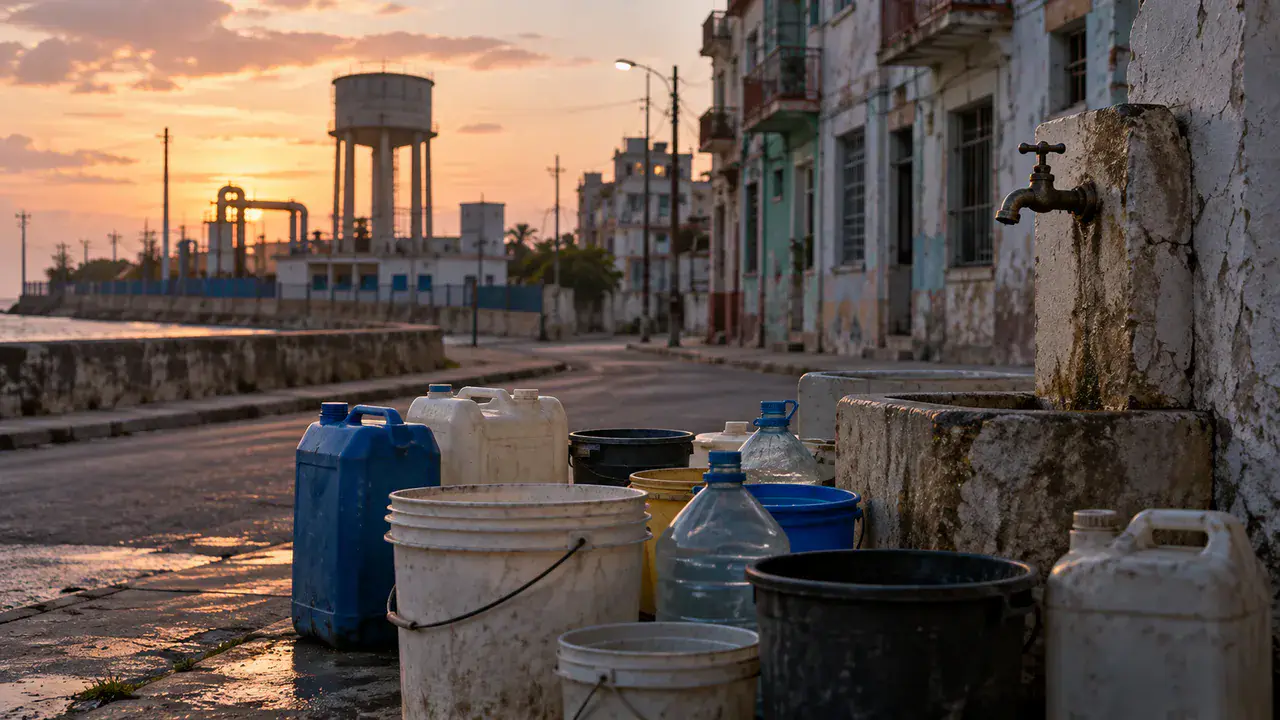
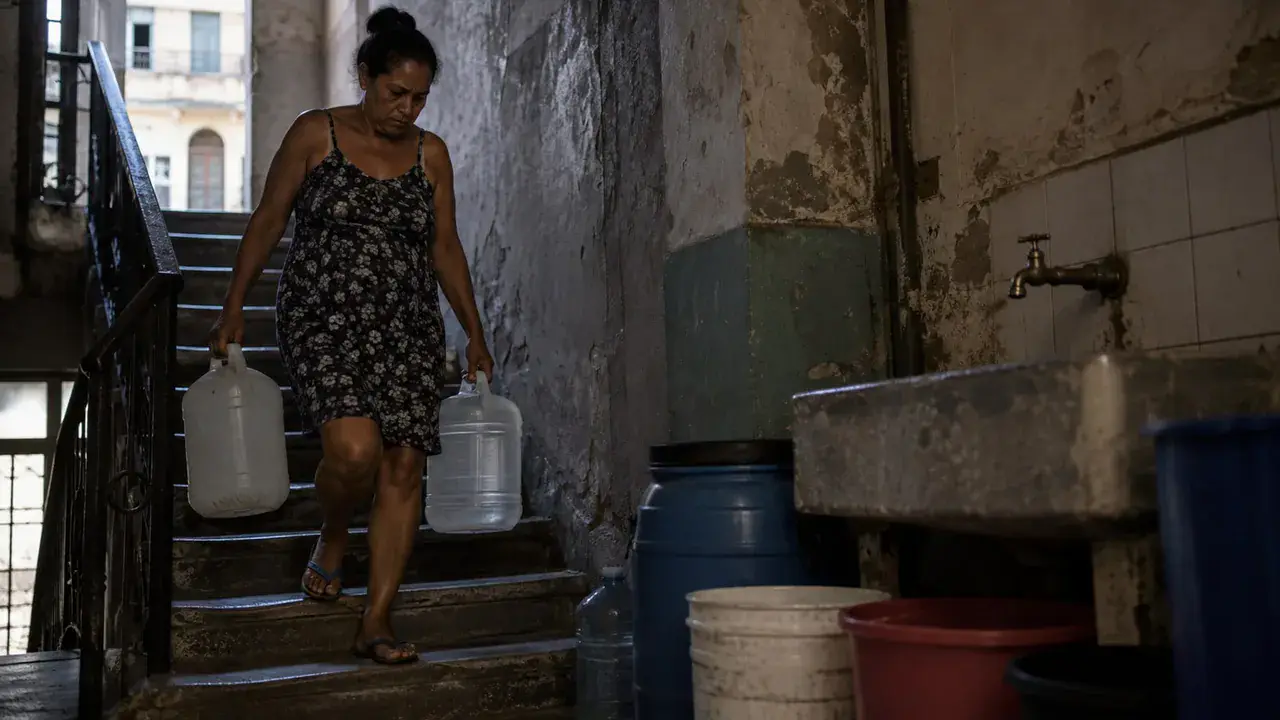
In Cuba, a blackout no longer means darkness alone. It can also mean stopped pumps, tanks that do not fill and a dry tap for days. More than 2.7 million people had disrupted water service, according to information released by hydraulic authorities. The scale turns a household difficulty into a national emergency.
Electricity explains an important part of the problem. Extracting, treating and moving water requires energy, and prolonged cuts interrupt every stage. When power returns, service does not always follow immediately: systems need to recover pressure, fill mains and restore cycles that can take hours. In Havana, a failure in the main South Basin pipeline affected more than 200,000 residents of three municipalities even after the break was repaired.
But reducing the crisis to blackouts would accept an incomplete diagnosis. Authorities themselves acknowledge failures at supply sources, deteriorating networks and years of insufficient investment and maintenance. Incidents were also reported in Pinar del Río, Artemisa, Granma and Holguín. The geography of interruptions shows not an isolated accident but a system with very little capacity to withstand failure.
The government speaks of more than 300 emergency works and use of solar power to sustain some pumping equipment. These measures are necessary, but their urgency shows how long prevention was delayed. A solar panel can keep one pump running; it does not repair a main, stop leaks or replace an aging network. Resilience requires combining energy, infrastructure, spare parts and local management.
While those solutions advance, the cost shifts to families. Obtaining containers, carrying water upstairs, waiting for a tanker or paying for a well consumes time, money and health. Scarcity hits older people, households with children, patients requiring constant hygiene and communities where safe water storage is nearly impossible most severely. Not every home can improvise a cistern or buy water informally.
The public response needs more useful information. Each municipality should publish realistic schedules, identified failures, estimated times and alternative distribution routes. When a deadline changes, it should be explained. Citizens can better withstand an interruption when they know what happened and when the next supply will arrive; silence turns waiting into distrust.
Water lost before reaching a home also must be measured. Without data on leaks, effective pumping, quality and coverage, works are announced but their impact cannot be evaluated. The current emergency should produce a transparent inventory of the most vulnerable networks and an investment plan that does not wait for the next break to begin.
Water and electricity are now two faces of the same precarity, but they should not be confused until responsibility disappears. Recovering generation will ease pumping; repairing and modernizing networks will prevent the next energy crisis from drying millions of taps again. The solution begins when both debts are addressed at the same time.