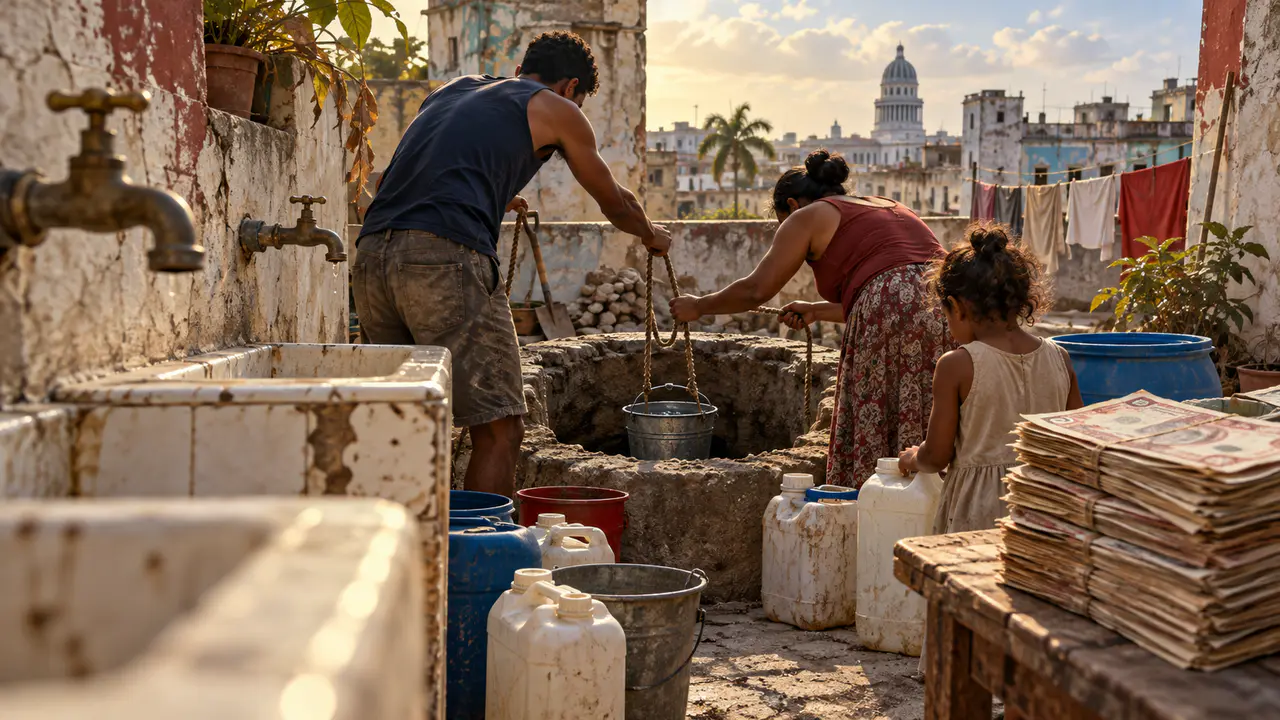
When the power goes out, communication also disappears
More than 100 cell sites can fail at once in Camagüey, showing that the power crisis not only darkens homes but weakens emergencies, work and family contact.
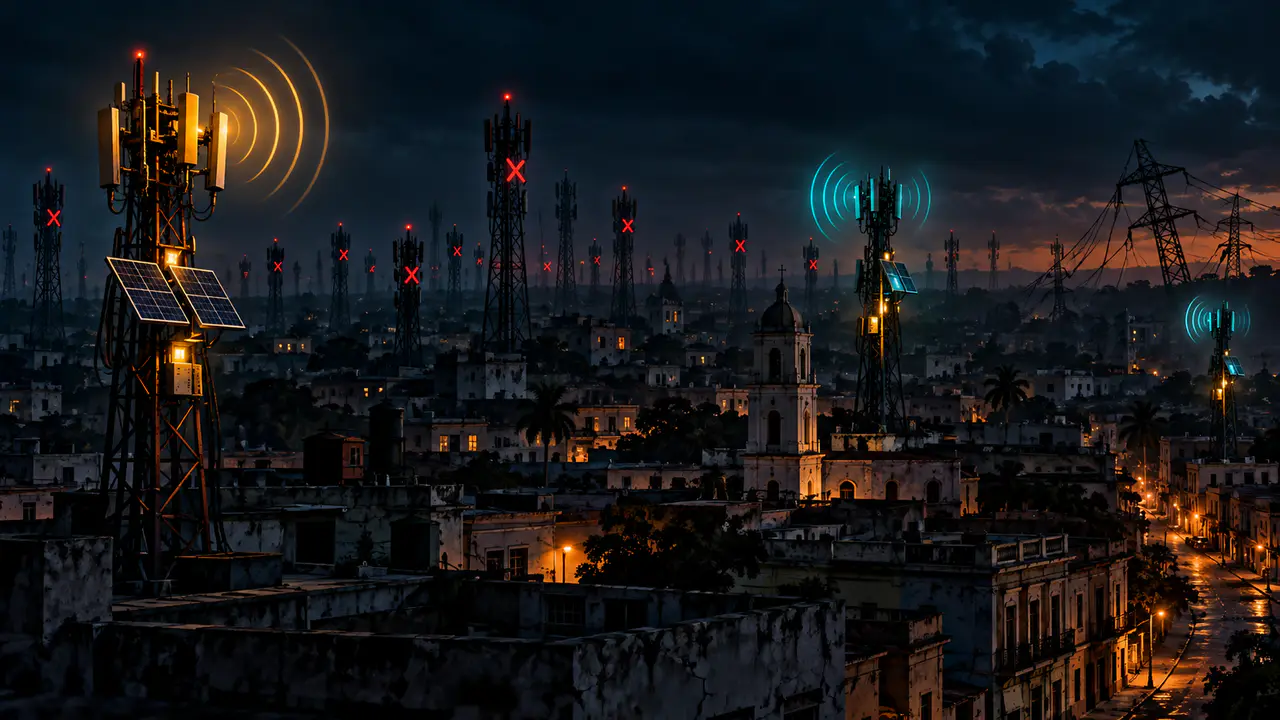
In Camagüey, more than 100 of ETECSA’s 179 cell sites can go out of service simultaneously because of a lack of electricity, according to territorial director Luel García Lorenzo. The figure describes a specific vulnerability: when many sites stop operating, those still active receive more traffic and can become congested. The energy crisis thus spreads from homes into daily communications.
The disruption does not mean every part of the province loses service identically or that each blackout produces the same outcome in every locality. What the executive acknowledges is that simultaneous failure of more than half the sites limits network capacity. For users, that can mean difficulty calling, connecting or remaining in contact, although no measurements by municipality or outage schedules were provided.
Energy is not the only problem described. García Lorenzo said three-quarters of fixed-network technology is obsolete, 12 kilometers of lead cable remain in service, and between 60 and 70 percent of the wiring has operated for more than 30 years. Those figures point to accumulated deterioration that cannot be solved solely by keeping antennas powered during an outage.
ETECSA installed 28 photovoltaic systems in the province between March and September. Some can sustain cellular service and provide 4G during the day, a concrete but limited improvement in reach and hours based on available information. Solar panels reduce direct dependence on the grid at certain locations; they do not prove that every site has sufficient backup or that coverage remains stable at night.
Battery backup adds another constraint. The company replaced more than 60 battery banks in 2025 and plans to replace about 50 more in 2026. García Lorenzo said most use lead-acid or gel technology, which does not tolerate the deep discharge associated with prolonged outages. The planned number indicates work in progress, not a guarantee that the energy problem will be resolved.
The plan also includes new installations and upgrades: mobile sites were enabled in Martí, Guáimaro and Cayo Cruz; two cell sites moved from 3G to 4G, and others were upgraded on the 900 and 2100 bands. Three larger projects remained at different stages: Guáimaro was 70 percent complete, Sierra de Cubitas 25 percent, and equipment was available in Nuevitas. Pending execution matters as much as the announcement.
Territorial management said the investment plan was about 300 percent of the year’s initial projection. That ratio alone does not show how much money was spent, how much went to energy or when users will see stable improvement. García Lorenzo himself said results would become visible as investments were consolidated, without giving a precise deadline in the available information.
For people who depend on their phones, continuity affects specific tasks: notifying family, coordinating activities or seeking assistance. No cases of failed emergency calls were provided, so specific consequences of that kind should not be asserted. Connectivity can nevertheless reasonably be treated as a service whose resilience matters, especially when its supporting power supply is unstable.
ETECSA acknowledged nationally that expanding the access network is not viable without enough capacity to provide energy backup. That admission places the issue beyond one province: installing new equipment is insufficient if electricity and batteries cannot sustain it. Practical questions remain for the company: which sites receive priority, how long their backup lasts and when announced projects and replacements will be completed.