Forty-four vehicles help, but they do not repair healthcare logistics
The electric fleet for distributing medicine reduces dependence on fuel; its real value will be measured by availability, charging, maintenance and verifiable deliveries.
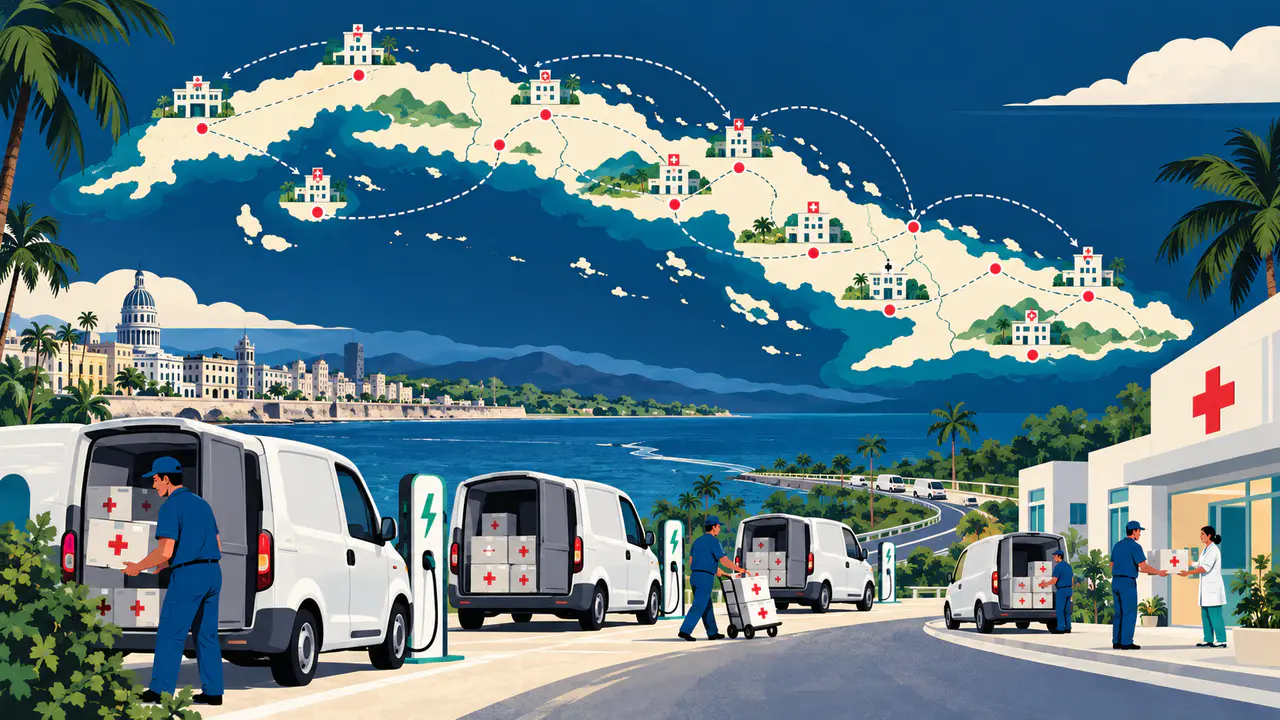
Cuba has begun adding 44 electric cargo vehicles to the national healthcare system to transport medicine, supplies and other essential loads. Transportation Minister Eduardo Rodríguez Dávila presented the initiative as support in the face of mobility difficulties. The announcement defines where the vehicles will go and their intended task, but it does not yet show how much they will change the regularity of deliveries or which products will reach each territory.
The announced distribution assigns 20 units to Havana and divides the other 24 among the provinces. Each vehicle has a cargo capacity of 3.2 tons, according to the information published about the purchase. Those figures are useful for sizing the operation, but they are not enough to calculate its reach: details are missing on range, number of trips, operating conditions and how often each vehicle will be available.
The fleet can reduce direct dependence on fuel for the trips for which it is suitable. That benefit, however, does not automatically amount to a logistics solution: it depends on the vehicles being charged and operating continuously. Officials have also not said how much fuel they expect to save or what it will cost to maintain the units. Without those references, the energy advantage is a reasonable possibility, not a quantified result.
Charging infrastructure is a decisive component. The available information mentions stations with solar panels but says they are still awaiting installation. Until their location, capacity and deployment schedule are known, it is impossible to determine how vehicle needs will be met in the different provinces. The difference between announcing a station and having it in operation may determine whether the fleet sustains regular routes or is constrained by charging.
The authorities themselves also recognize a limit: the minister said the vehicles will not be enough to cover all the healthcare sector’s needs. That admission establishes a more realistic expectation than presenting the purchase as a comprehensive response. The value of the fleet should be measured as partial support, not as a guarantee that medicine and other supplies will reach every facility that needs them in sufficient quantities.
Transportation is only one link in distribution. The vehicles can move cargo, but the information provided does not make it possible to assess inventories, delivery priorities, product availability or route planning. Even a functioning fleet therefore does not, on its own, show that access to medicine has improved. Evaluating the result will require separating the capacity to transport supplies from the actual existence of those supplies.
Assigning 20 units to the capital and 24 to the rest of the country raises another practical question: how it will be decided which territories receive the remaining vehicles and which needs will be used to set route priorities. The published figures describe the broad distribution but do not identify criteria, a timetable or those responsible for operating the fleet. That absence does not invalidate the initiative, but it does prevent verification that the distribution responds to specific differences in demand.
The assessment should rely on verifiable indicators: active vehicles, trips made, loads delivered, interruptions caused by charging or maintenance, and fuel saved. Those figures and a baseline for comparing performance have not been provided. The 44 vehicles may strengthen healthcare logistics, but their value cannot be inferred from the purchase alone: it will depend on the pending infrastructure, operational continuity and deliveries that can be documented.