Deporting Daniela Fuentes moved the danger; it did not resolve her case
The Cuban trans woman sent from Miami to the Central African Republic says she hides her identity to survive; her situation requires measuring deportation by the risk that follows.
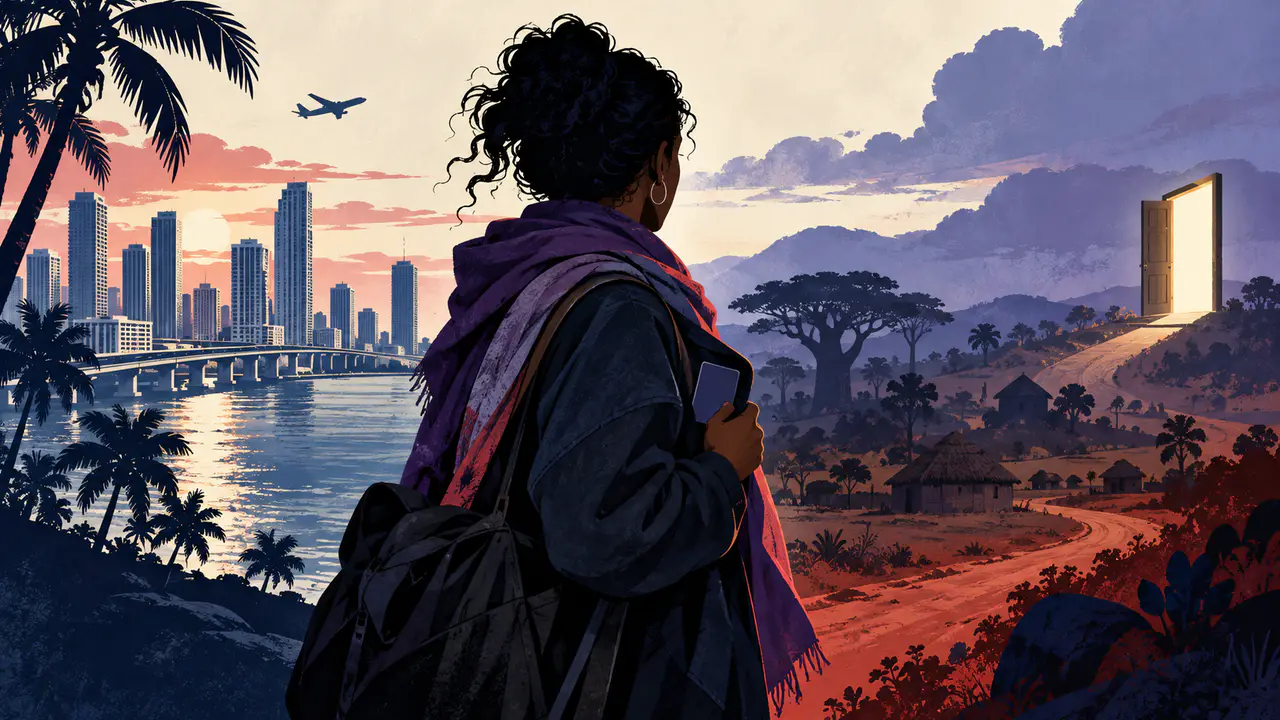
Daniela Fuentes, a 32-year-old Cuban trans woman, remains in Bangui after being deported from Miami to the Central African Republic. According to published information, she wears men’s clothing for protection and uses her wig only in the privacy of the bathroom. Seeking asylum in another country, perhaps Canada, is an intention she has expressed, not a confirmed proceeding.
The change contrasts with her life in Miami, where she worked in a beauty salon and could present openly as a woman. That contrast does not by itself establish every reason for her transfer or predict the outcome, but it does show the immediate cost she describes: concealing central parts of her identity to try to go unnoticed where she now lives.
Fuentes lives in a Bangui apartment complex where authorities house people deported from the United States. She shares a room with four Cuban men who know her identity and, according to her account, look after her. She has no passport or other identification documents; besides preventing her from working, that absence may expose her to problems if she leaves the housing.
The information says officials have advised the deportees to avoid going out, although Fuentes is able to do so. The International Organization for Migration has provided food, and the group has collected donations to buy groceries. These facts describe immediate assistance but do not clarify how long it will continue, what livelihood options will exist afterward or when their documentation can be regularized.
The Cuban embassy authorized her return to the island, but Fuentes wants to seek protection in another country, with Canada mentioned as a possibility. The available material contains no record of an asylum application filed or accepted and no departure date from Bangui. Maintaining that distinction is important: authorization to return to Cuba does not mean a safe alternative has already been secured.
Her earlier path included leaving Cuba in 2023 after harassment and economic hardship she said she experienced, spending seven months in Mexico and entering the United States through a CBP One appointment. In Miami she was able to work and live openly as a woman. That sequence helps explain her options but does not replace an individual assessment of her current circumstances or establish where she will go.
Regarding the immigration process, Fuentes said she asked to transfer a case pending before a Texas court to Florida and received no response. She missed a hearing and was later detained outside a motel. Public records reviewed by the outlet confirm that a judge ordered her removal from the United States, though they do not detail the circumstances of the decision. ICE did not answer reporters’ questions.
The case falls within a broader context described by Human Rights Watch: a cited report counted 536 people deported from the United States to African countries other than their own between January 2025 and August 2026, including at least 12 LGBT people sent to countries that criminalize same-sex relations or certain public displays of affection. Those data provide context but do not establish which protections were applied to Fuentes.
The unresolved question is not only whether the deportation was carried out, but what effective protection exists after transfer and which future the affected person can choose. Here, the lack of documents, uncertainty over asylum and Cuban authorization to return are distinct circumstances requiring concrete answers. Measuring the outcome only by departure from the United States excludes safety and the possibility of rebuilding a life.