Ten airports without fuel are a national warning
The unavailability of Jet A-1 through November does not close the terminals, but it makes routes more expensive, forces stopovers and exposes the deterioration of infrastructure vital to Cuba.
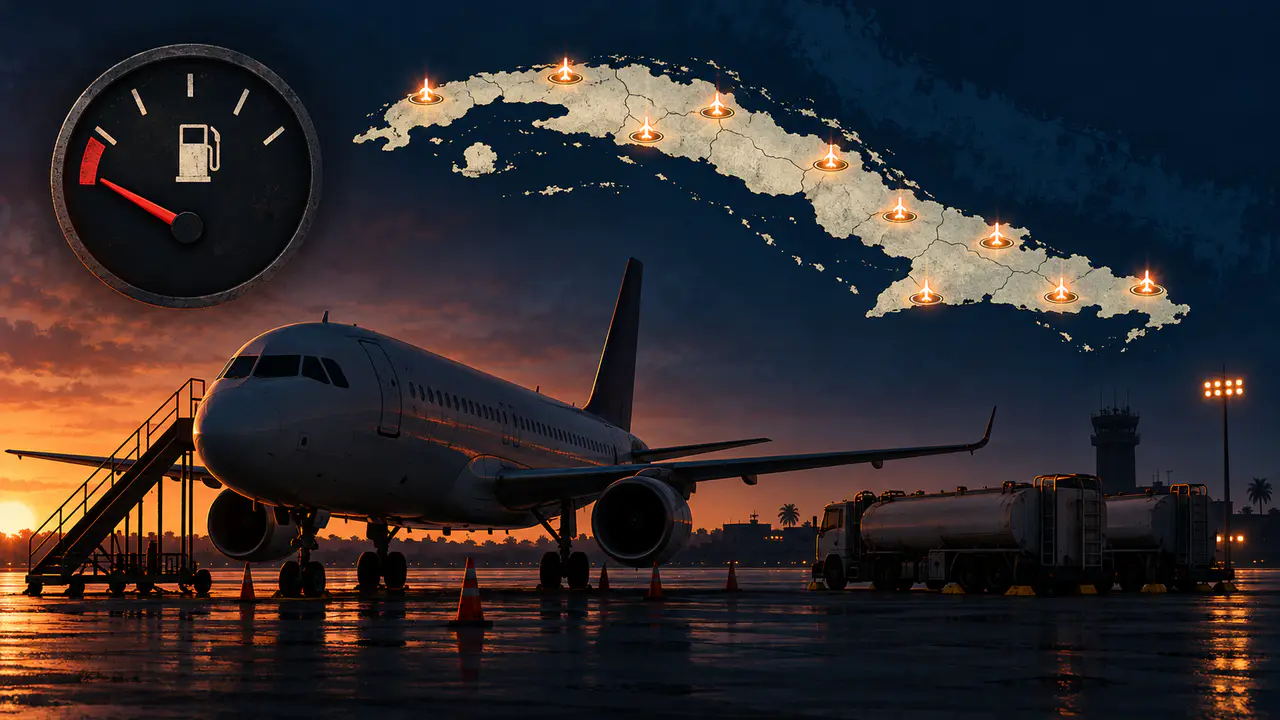
Ten Cuban airports have aeronautical notices stating that Jet A-1 fuel is unavailable for refueling through 04:00 UTC on November 1, 2026. That date is the scheduled expiration of the current notices, not a guarantee that fuel will again be available then. The notices may be amended, canceled or replaced as circumstances change.
The list covers terminals in Havana, Varadero, Cienfuegos, Santa Clara and Camagüey, as well as Cayo Coco, Holguín, Santiago de Cuba, Manzanillo and Cayo Largo. The geographic reach matters: this is not a single route or destination facing an isolated problem, but a restriction that requires airlines to plan operations without refueling across much of the country.
The warning has a specific scope. It does not order the airports closed and does not mean every flight is canceled; it says Jet A-1 is unavailable to supply aircraft at those facilities. That distinction avoids two equally mistaken conclusions: assuming travel is impossible or assuming itineraries will continue unchanged.
An airline can depart for Cuba carrying enough fuel to complete its planned operation, provided the distance, weight and flight conditions allow it. Routes requiring more fuel may need a technical stop in another country. Feasibility is not the same for every aircraft or itinerary, so a general notice cannot predict the outcome of each flight.
The alternatives have concrete consequences: carrying additional fuel reduces available payload, and a stop adds time and cost. It may also affect schedules or later connections. For passengers, the practical risk is not only cancellation; it may be a modified itinerary, an unplanned stop or an unworkable connection when segments were purchased separately.
The current notices extend a restriction documented since February and replace notices that were due to expire in early October. Repeated extensions make November 1 less useful as a dependable date for normalization. Until new communications are issued, uncertainty over fuel supply remains part of airline and travel planning.
The crisis has already coincided with different business decisions: some airlines suspended service, while others changed operations or added refueling stops outside Cuba. Those precedents show how fuel shortages can affect connectivity, but they do not allow every route change to be attributed to a single notice or predict which airlines will adjust operations now.
The prolonged shortage also exposes a vulnerability that extends beyond passenger convenience. When routes depend on fuel loaded at origin or stops in third countries, the number of points where an operation may be disrupted increases. Tourism, family travel and air transport need more than open terminals for stability; they need a supply capable of sustaining predictable itineraries.
Travelers with scheduled flights should confirm the status of both outbound and return trips directly with the airline and review times, stopovers and connections. Available information does not clarify when refueling will resume or whether the restriction will be extended again. Without a confirmed normalization date, checking the itinerary is necessary, although it cannot replace regular public communication about changes.