Cuba’s tourism collapse no longer allows temporary explanations
The loss of more than 813,000 visitors in eight months reveals a structural problem of connectivity, services and confidence that new hotel rooms cannot fix.
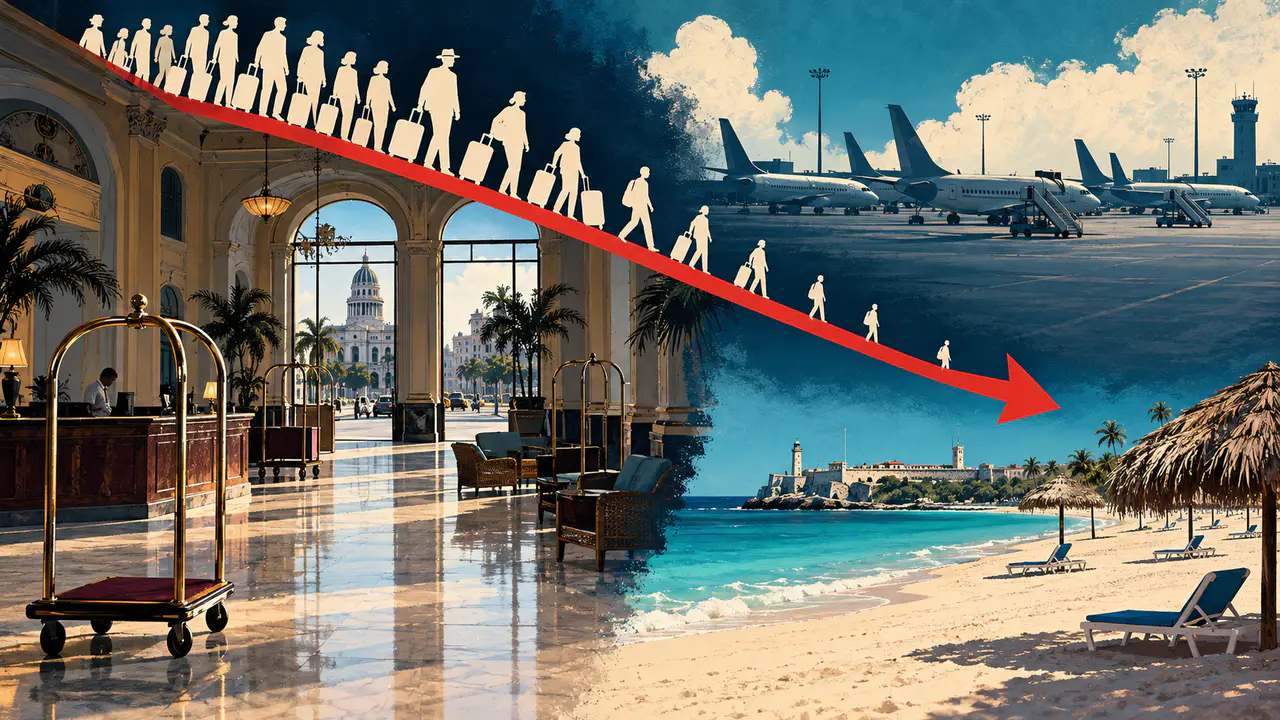
The statistical report released for the first eight months of 2026 records 450,353 arrivals by travelers from abroad. The equivalent period in 2025 had registered 1,264,332. The gap between the two totals is 813,979 arrivals, a decline of 64.4%. This is not an annual figure and cannot by itself predict the year-end result, but it does show the scale of the deterioration accumulated through August.
The comparison is based on preliminary ONEI figures and covers only January through August. That boundary matters: turning the partial result into a 12-month projection would require information that is not available. Even with that limitation, the difference between the two comparable periods is enough to rule out a minor variation or an isolated movement in a single month.
The Canadian market accounts for about 400,000 of the arrivals lost from the previous year, a share close to half of the overall decline. That weight makes the total especially vulnerable when the flow from Canada falls. Yet the Canadian contraction does not explain the entire decline: the available material does not provide a full breakdown of the causes or of the other markets.
Air Canada suspended flights on February 9 because aircraft fuel was unavailable. Cancellations and supply difficulties appear alongside deteriorating services as factors associated with tourism’s poor performance. But no figures show how much each element contributed to the loss or separate the effect of connectivity from the effect of the visitor experience at the destination.
August closed with 30,490 arrivals from abroad. At the same time, Cubans living outside the island represent a growing relative share of people traveling to the country. These are different signals: a larger proportional share for this group does not mean the total volume recovered, nor does it demonstrate that their reasons for traveling or their expectations match those of visitors who choose Cuba for a vacation.
A structural reading does not mean attributing everything to flights. It means recognizing that connectivity and service quality form part of the same product. If transportation is uncertain and tourism services deteriorate, an available room alone does not resolve the reasons a traveler may choose another destination. The data, however, do not directly measure satisfaction or identify individual visitor decisions.
Assessing the sector’s response requires indicators the aggregate balance does not include: occupancy by property, changes across individual markets and monthly performance after August. Without that detail, it is difficult to know where the decline is concentrated and which measures produce results. It is also useful to distinguish physical capacity from the effective ability to provide reliable service; the first does not automatically guarantee the second.
The practical question is whether Cuba can rebuild a travel experience that is predictable from booking through the stay. The recorded decline points to a problem that cannot be solved with short-term explanations, although it does not by itself identify a single cause. Publishing more detailed data would make it possible to determine which markets remain active, which are contracting and whether connectivity and services are improving in verifiable ways.