Spain gains Cuban residents as Cuba loses voters and future prospects
More than 252,000 people born on the island now live in Spain; that increase and the decline in Cuba’s electoral registry portray migration that also drains active citizenship.
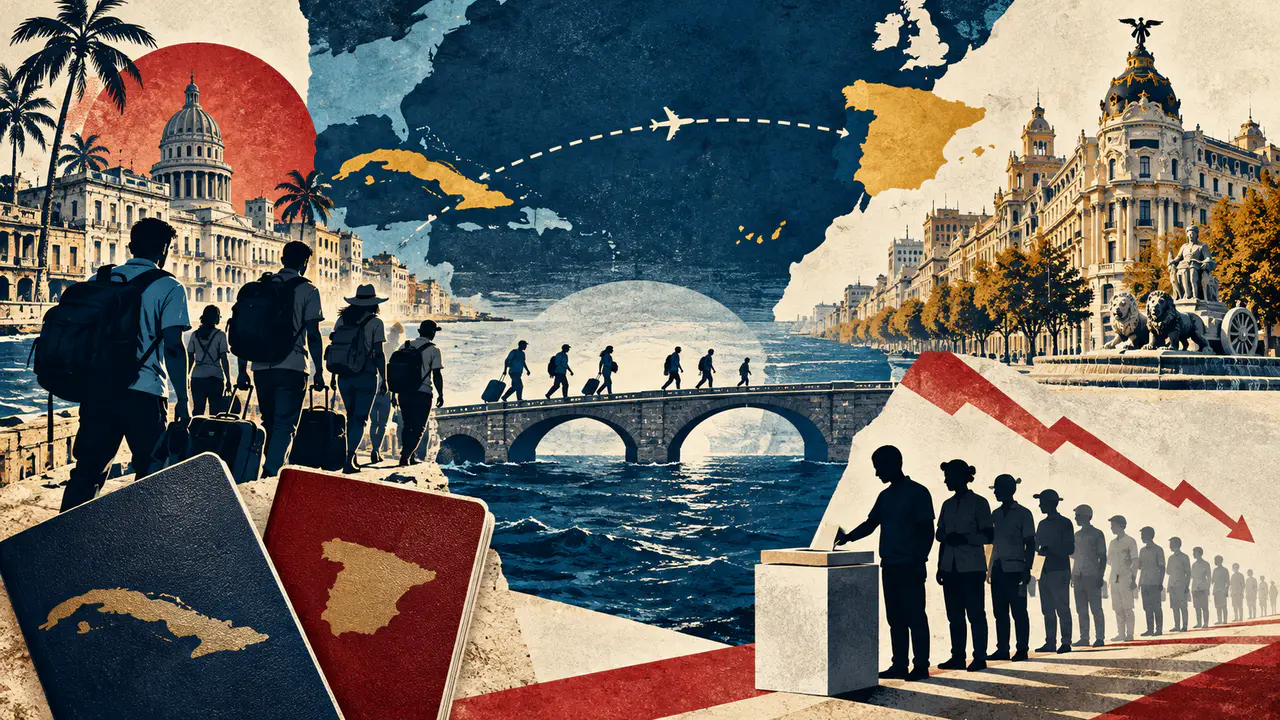
More than 252,000 people born in Cuba live in Spain, according to the cited report, which places the figure 52% above the 2021 level. The data show an increase in residents of Cuban origin, but they do not explain when each person moved or which reasons weighed on the decision. This is a significant demographic snapshot, not a complete explanation of migration or its causes.
One factor that may facilitate the movement is the possibility of obtaining Spanish nationality through the Democratic Memory Law. The available material links that route to part of the increase without quantifying how many people used it or claiming it was the main reason for every departure. The law provides a legal gateway for some paths, but it does not replace personal, family or economic reasons that are not broken down in the data.
At the same time, the number of Spanish citizens registered to vote from Cuba is declining. That registry observes people with a right to participate in elections from the island, not the entire Cuban-born population living in Spain. The decline is interpreted as an indication that Spanish citizens have left Cuba, but the electoral data do not directly count new residents or establish a complete migration balance.
The coexistence of both movements is significant as long as their denominators are not mixed. One figure counts people born in Cuba who live in Spain; the other tracks electoral registrations of Spanish citizens living in Cuba. The groups are not necessarily identical and do not measure the same phenomenon. Reading them together points to a relationship between mobility and citizenship, but it does not show that each new residence in Spain corresponds to a removal from the registry in Cuba.
The report attributes part of the migration growth to access to nationality. That mechanism may expand travel options for those who meet the requirements, but the information does not detail how many people applied for or received citizenship or when they emigrated. Without those data, it is impossible to measure how much the law explains relative to other factors. Presenting a partial cause as a complete explanation would conceal precisely what remains unknown.
The reduction in people registered to vote from Cuba also requires context. The material mentions a decline but does not provide a complete series, age breakdown or exact number of people affected. It therefore does not allow the scale of departure to be calculated precisely or show what share stems from emigration, registry changes or other circumstances. The trend is a signal; its reach requires comparable data and an explicit method.
A civic consequence deserves attention: when eligible citizens no longer live in a country, the composition of the electorate registered there may change. But the available count does not measure actual participation, reasons for abstention or specific political effects. Nor does it show that emigration by itself empties institutions or communities. It does raise a question about the distance between holding an electoral right and being able to exercise it from one’s place of residence.
The increase in residents born in Cuba and decline in electoral registration from the island describe related but distinct trends. Understanding their reach requires complete series, clear definitions and figures on nationality routes and migration motives. For now, the numbers support a limited conclusion: more people born in Cuba live in Spain than in 2021, while the electoral registry of Spanish citizens in Cuba is shrinking. The causes and consequences require more evidence.