Importing to sell: an opening forced by scarcity
Allowing individuals to formalize commercial imports recognizes an economic reality, but by itself it will not resolve cost, inequality or customs discretion.
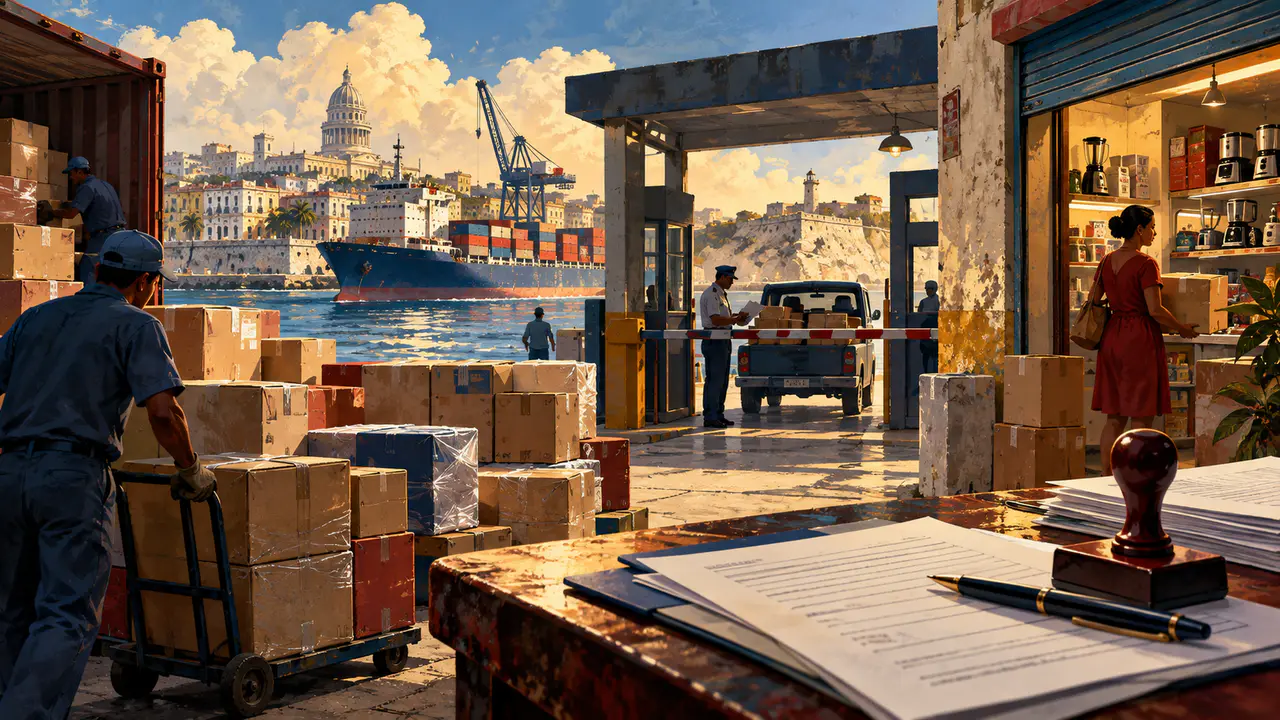
Authorizing individuals to formalize commercial imports changes the treatment of goods that previously faced retention or confiscation when they exceeded personal-use limits. Decree-Law 132/2026 took effect October 12. The shift matters, but its scope must be precise: it creates a customs procedure for certain goods; it does not grant citizens general foreign-trade authority.
The mechanism recognizes a supply practice that, according to available information, already relied on travelers, shipments and private networks to cover shortages in the state market. Formalization may reduce uncertainty for people transporting goods in quantities considered commercial. But it does not make every load admissible: Customs retains authority to assess quantities, repetition and characteristics, while specific bans and regulations remain.
Access to the new procedure also carries a price denominated in foreign currency. For travelers, duties are progressive: 15 percent on the first $2,000 of value under commercial clearance, 20 percent on the portion above that up to $4,000, 25 percent up to $6,000, and 30 percent above that threshold. Shipments under the system face a 30 percent rate plus applicable customs service fees.
Legal opening therefore does not mean equal economic access. Payments must be made in dollars using enabled cards, although airports accept cash. In an economy where state wages are paid in pesos, the requirement creates a practical barrier for those without foreign currency. The design legalizes certain excess goods but does not ensure that every traveler can afford the cost.
The effect on supply will depend on more than the number of authorized operations. The measure may facilitate entry of scarce items and allow products to reach private businesses, but by itself it does not correct low production, foreign-currency shortages or investment difficulties described in the sources. Nor does it ensure savings from avoiding confiscation will produce lower consumer prices.
Customs discretion is another decisive issue. Authorities must determine when a shipment is commercial based on composition and repetition. That power may be necessary to apply different categories, but its legitimacy will depend on accessible criteria, explainable assessments and an effective way to challenge decisions. Without sufficient information, formalization may reduce confiscation risk while preserving uncertainty about what is admitted and at what cost.
The ability to clear excess goods must also be distinguished from unlimited authorization. Prohibited items and products subject to special requirements are not enabled by payment; the rules also provide administrative measures when procedures are not completed. For travelers, knowing documents, value calculations and re-export options in advance is as important as knowing the duty percentage.
The reform therefore has two tests: whether it reduces lost merchandise and whether the procedure is understandable, predictable and accessible beyond people who already have foreign-currency capital. The opening replaces a broad prohibition with a regulated route but does not solve unequal access or supply problems. Daily implementation, decision-making transparency and the effect of charges on final prices remain to be seen.