Fewer Cuban missions do not yet mean greater labor freedom
Washington puts the number of Cuban workers sent abroad at between 15,000 and 18,000, but the decline attributed to diplomatic pressure must be judged by the autonomy each professional gained.
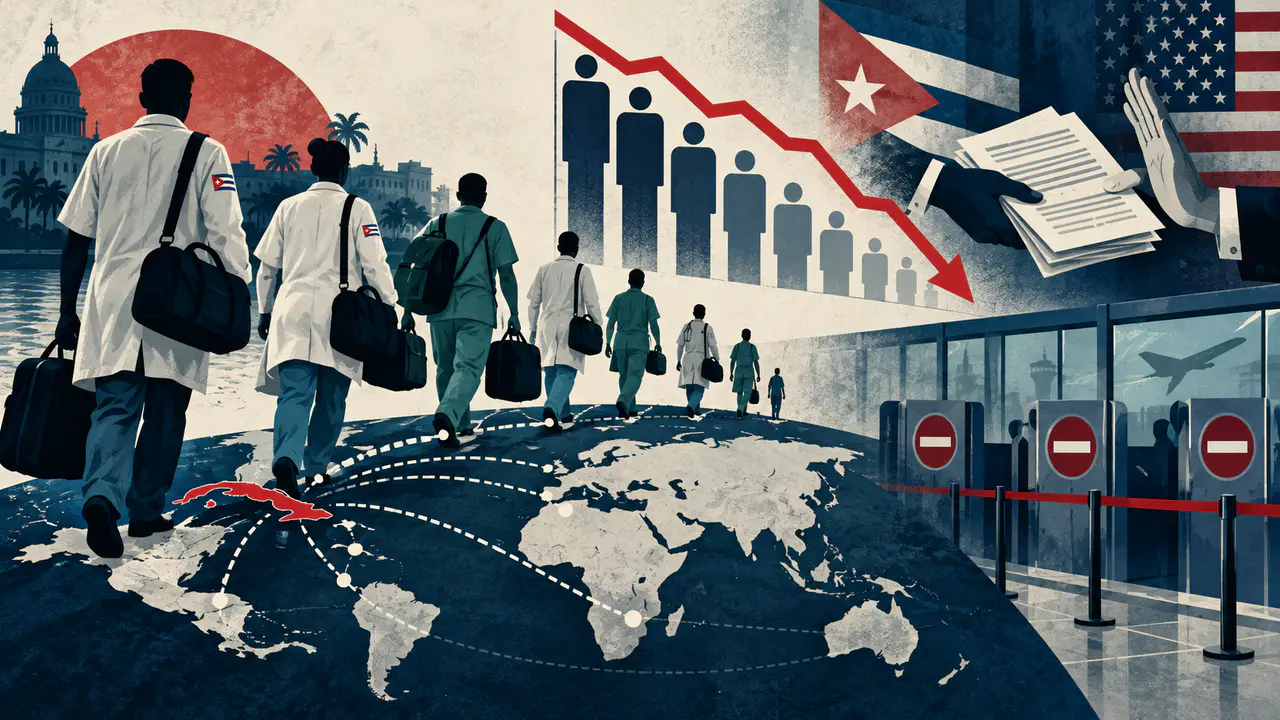
The U.S. State Department estimates that Cuban workers connected to state programs abroad fell from about 24,000 in early 2025 to between 15,000 and 18,000 in 2026. Washington attributes part of the decline to diplomatic pressure and visa restrictions. The estimate describes a reduction; by itself, it does not establish what changed in each professional's working life.
The U.S. trafficking report describes Cuba's labor-export program as a government pattern of forced labor. That is Washington's official assessment and should be presented as such. The same document says health professionals make up about 75 percent of the exported civilian workforce and that Cuban workers remained in 53 countries during 2026.
The reduction, estimated at between 6,000 and 9,000 people from the initial figure, does not identify destinations or individual circumstances. Available material does not break down how many returned to Cuba, moved to direct contracts or stopped working abroad. Nor does it independently attribute the entire variation to U.S. measures, although the State Department presents them as a relevant factor.
The figures also require methodological caution. In 2025, Cuba's public-health minister cited more than 23,000 health professionals in 56 countries; that count covers a different date and category from the U.S. estimate of all civilian workers. Without a common methodology and detailed data, the two series cannot be compared as though they measured the same population.
The central question is not only how many missions end, but who controls contracts, documents and income. The State Department alleges wage withholding, surveillance and movement restrictions; the Cuban government rejects those allegations and says participation is voluntary and workers are paid. Available information records opposing positions but cannot apply every allegation to every participant.
For professionals, a changed agreement can create a real alternative if it guarantees voluntary contracting, access to documents and transparent payment. Jamaica offers an example cited in the sources: after ending its bilateral agreement, 157 Cuban health workers returned under individual contracts and 43 others remained under that arrangement. The reported total was 200, although that case alone does not show the model can be replicated everywhere.
Host governments also bear a concrete responsibility: publish terms and payment mechanisms, monitor labor compliance and provide paths for workers to decide without threats. Direct hiring can reduce state intermediation, but its effect depends on the guarantees accompanying the contract. If agreements are merely canceled without safe alternatives, mission numbers may fall without increasing professional autonomy.
The decisive indicator therefore should not be limited to the number of deployed workers or revised agreements. Data are needed on wages actually received, freedom to change employment, return or continued residence in the host country, and protection from retaliation. The U.S. report does not provide an individual accounting of those outcomes. Until one exists, the decline is relevant but does not by itself prove greater freedom for professionals.