An allegation that a weapon was planted requires investigation outside the prison
Henry Constantín Ferreiro’s accusation against prison authorities raises a serious risk: fabricating an infraction to worsen his position inside prison.
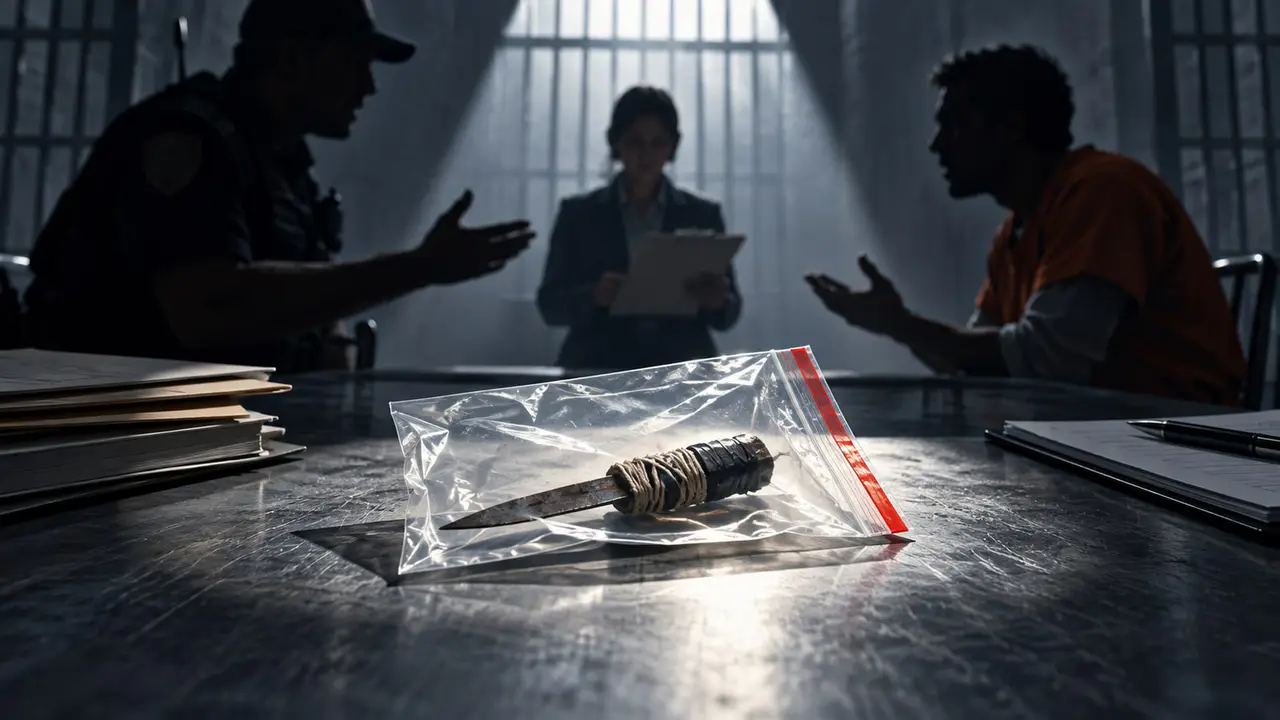
Henry Constantín Ferreiro said staff at Kilo 7 prison in Camagüey planted a knife among his belongings after a search. This is a serious accusation attributed to the journalist, not a fact independently confirmed by the available information. Prison authorities are accused, but the reviewed material includes neither their response nor an official explanation of the alleged discovery.
Reports say Constantín communicated the allegation from prison by telephone and also sent an audio message to La Hora de Cuba. His account links the alleged discovery to a surprise inspection. Published information does not establish with certainty how the search was conducted, who found the object or which records might clarify whether it was among his belongings beforehand.
The case extends beyond disagreement over the knife. Later reports say Constantín was taken to a punishment cell for at least 15 days after agents alleged they found the weapon. The disciplinary measure and the prisoner’s account must be distinguished: one describes the reported consequence; the other disputes the object’s origin. The material does not independently verify the circumstances of either.
The difference between those versions makes preservation of evidence for review outside the prison essential. Search records, disciplinary documents and testimony from those present could help clarify the sequence if they exist and are accessible. Available information does not show whether recordings were preserved, a detailed report was created or the journalist could formally challenge the finding.
Reports also contain an unresolved timing discrepancy. One source places the episode on September 9, 2026, while others cite September 16; the news appeared in mid-October. That difference prevents an exact timeline of the search and punishment. It matters because dates could help identify documents and compare accounts.
The Cuban Observatory for Human Rights filed a formal complaint with the Camagüey Provincial Prosecutor’s Office, copying the Military Prosecutor’s Office, over alleged irregularities. It also asked the Supreme People’s Court and Prosecutor General’s Office to clarify what happened. Filing a complaint confirms that institutional action was requested; it does not by itself prove manipulation.
OCDH expressed concern about a possible setup to charge a new offense, while Constantín denied that the weapon belonged to him, according to the reviewed coverage. Those claims must be attributed without turning them into a judicial conclusion. The absence of a public response from authorities and verifiable information about an investigation leaves unanswered which process was opened and which safeguards the prisoner has.
A reliable investigation requires that the institution accused not be the only body controlling the evidence and evaluating its own conduct. Access to legal representation, review of search documentation and a formal response from authorities would help test the competing versions. They would also separate the verifiable facts—the allegation and filed complaint—from claims still awaiting verification.
The underlying question is whether the object’s origin will be established and whether the disciplinary punishment followed due process. Available information does not show whether new charges were filed, what decision was made on the complaint or whether an independent review occurred. Until those answers exist, the allegation cannot be treated as confirmed, but neither should it be dismissed without examination, especially because the accuser remains in the custody of the challenged institution.