
Alandete: internal divisions thwarted a pact to remove Díaz-Canel
The White House correspondent maintains that talks with Raul Castro's relatives were close to materializing, but they met with resistance in Cuba and Miami.
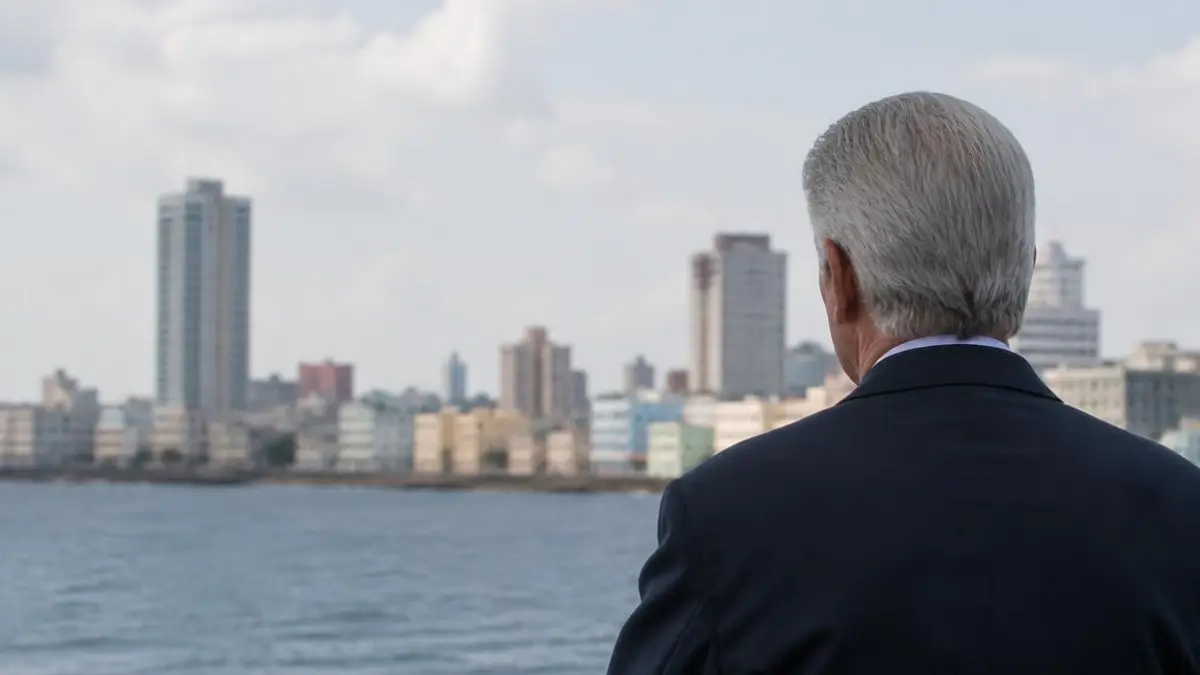
An understanding between Donald Trump's administration and Raul Castro's relatives to remove Miguel Diaz-Canel from power was close to prospering, but fell apart due to disagreements within the Cuban apparatus, according to Spanish journalist David Alandete. The accredited correspondent at the White House said that sectors of the Castro regime opposed negotiating with Washington, including Trump and Secretary of State Marco Rubio. There were also reservations among Cuban exile groups in Miami, concerned that a replacement of the ruler would preserve the existing political structure.
Alandete presented his version in The Alandete Report, released by ViOne. The background of the talks had been published in September by The Miami Herald: Washington would have proposed to supply oil and investments in exchange for the departure of Díaz-Canel and changes in the state-owned company CUPET. According to that report, among the interlocutors was Raúl Guillermo Rodríguez Castro, grandson and personal assistant of Raúl Castro, known as "El Cangrejo."
The initiative contemplated modifying the management of CUPET, which operates refineries and stores fuel. The newspaper reported that the United States was looking for investors from that country to control the company, although formulas for joint participation with the Cuban state were also considered. In Havana there were reservations about depending on a U.S. supplier for oil. In Miami, there was also opposition to an agreement that would keep Castro's system of power in place.
Alandete links the failure of the negotiation with the subsequent hardening of U.S. policy toward Cuba. In his opinion, Washington went from exploring an agreed solution for Díaz-Canel to increasing economic and political pressure with the purpose of promoting changes from the government apparatus itself. The fuel measures had already been activated in January, when Trump signed an order that allowed tariffs to be imposed on countries that sold oil to the island.
The U.S. administration sanctioned the military conglomerate GAESA in May and, on June 11, added CUPET to its sanctions list. On November 5, it announced new measures targeting a crude oil transportation network, state entities, and suppliers located in China that Washington said were linked to the Cuban Armed Forces. It also left open the possibility of sanctions in sectors such as electronics, manufacturing, shipping, and technology.
The correspondent's analysis comes after the November 3 legislative elections, in which Democrats gained control of both chambers since January 2027. Alandete expects that majority to be able to intensify executive oversight, but he does not believe that it will substantially alter Trump's course towards Cuba or Venezuela. The sanctions announced after the vote, he said, indicate that Washington is maintaining its strategy of pressure on Havana.