
Rubio reaffirms that Cuba is a priority of Washington and demands changes on the island
From Paris, the secretary of state linked economic restrictions to emigration and said the United States will continue to seek change, although he avoided revealing whether there were contacts with the CIA.
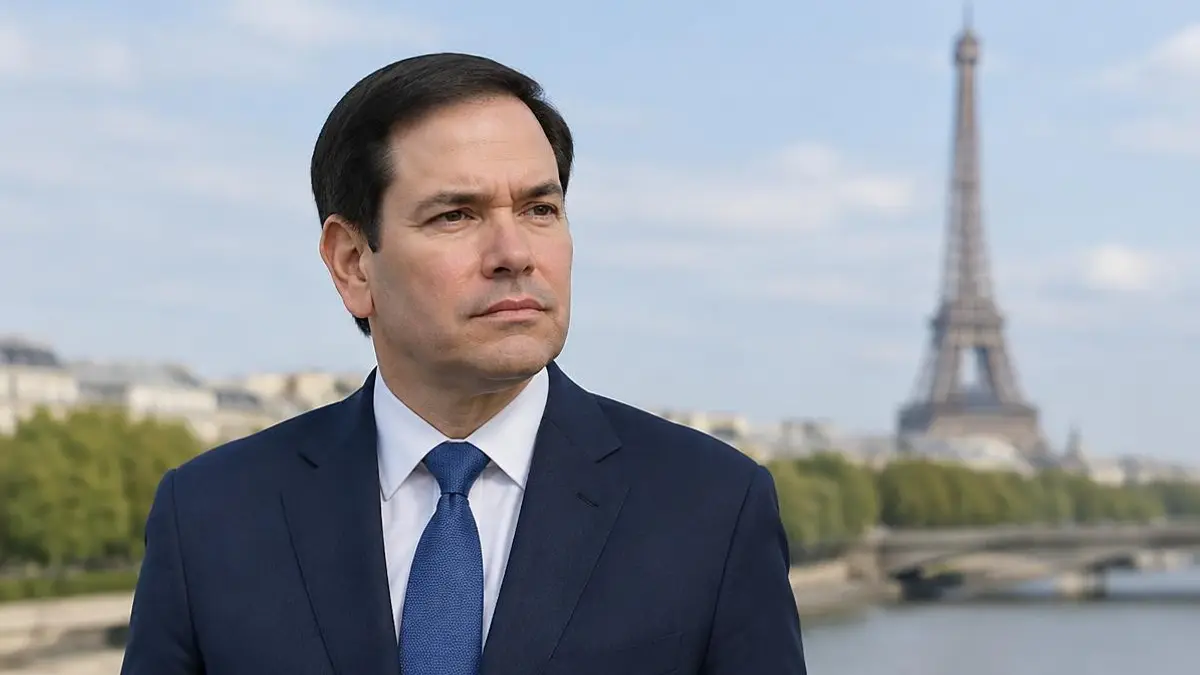
U.S. Secretary of State Marco Rubio said Monday in Paris that his country will continue to work to promote change in Cuba and help the island achieve a better future. His statements were made during the G7 foreign ministers' meeting and were released by the State Department. Rubio said that this work remains among the priorities of Donald Trump's government, despite the resistance he attributes to Cuban leaders.
The official said that recovery also depends on those who govern Cuba and urged them to abandon the current course. In his opinion, the fear of the authorities of losing control prevents citizens from deciding how to earn a living. Washington, he explained, seeks that Cubans can work and generate income autonomously, without depending on the State to obtain resources or sustain their activities.
Rubio pointed out that the Cuban government tolerates only a part of the economic activity that it considers necessary to avoid further deterioration, but limits the independence of the population. According to his argument, a citizenry with more capacity to produce and manage its income would be more difficult to control. The secretary of state linked this model to the departure of millions of people from Cuba, many of them heading for the United States.
The exodus, he added, helps explain Washington's attention to the island, whose situation it considers linked to national security and U.S. interests. Rubio also leveled accusations against GAESA, the business conglomerate under the control of the Cuban Armed Forces. He claimed that this structure appropriates scarce resources while people related to power keep large sums in accounts outside the country.
His remarks came days after the State Department announced sanctions against relatives of GAESA leaders and measures that affected five ships. Regarding the U.S. embargo, Rubio recalled that it is set by law and that its lifting requires political freedom in Cuba. He did not detail new conditions or announce changes in Washington's position regarding that measure.
Asked if anyone had responded to his October call to share information with the CIA, Rubio did not confirm that the agency had received data. He explained that revealing possible contacts could expose those who communicated with her. In closing, he admitted that changing the political direction of Havana is difficult, but reiterated that the United States will maintain its work on Cuba because the issue is a priority for the administration.
Sources consulted
3 outlets- CiberCuba«Es una prioridad»: Rubio asegura que EE.UU. seguirá trabajando por un cambio en Cuba ↗
- Cuba en MiamiMarco Rubio advierte al régimen cubano desde París que «no hay futuro en el camino que siguen ahora» ↗
- CiberCubaRubio sobre Cuba: «Vamos a hacer todo lo posible pero requerirá de que ellos despierten» ↗