
A grocery purchase in Baracoa exceeds the average salary without meat or eggs
Karla NavOs showed the food she could buy with a budget of 8,500 pesos. Rice and beans accounted for most of the spending she detailed.
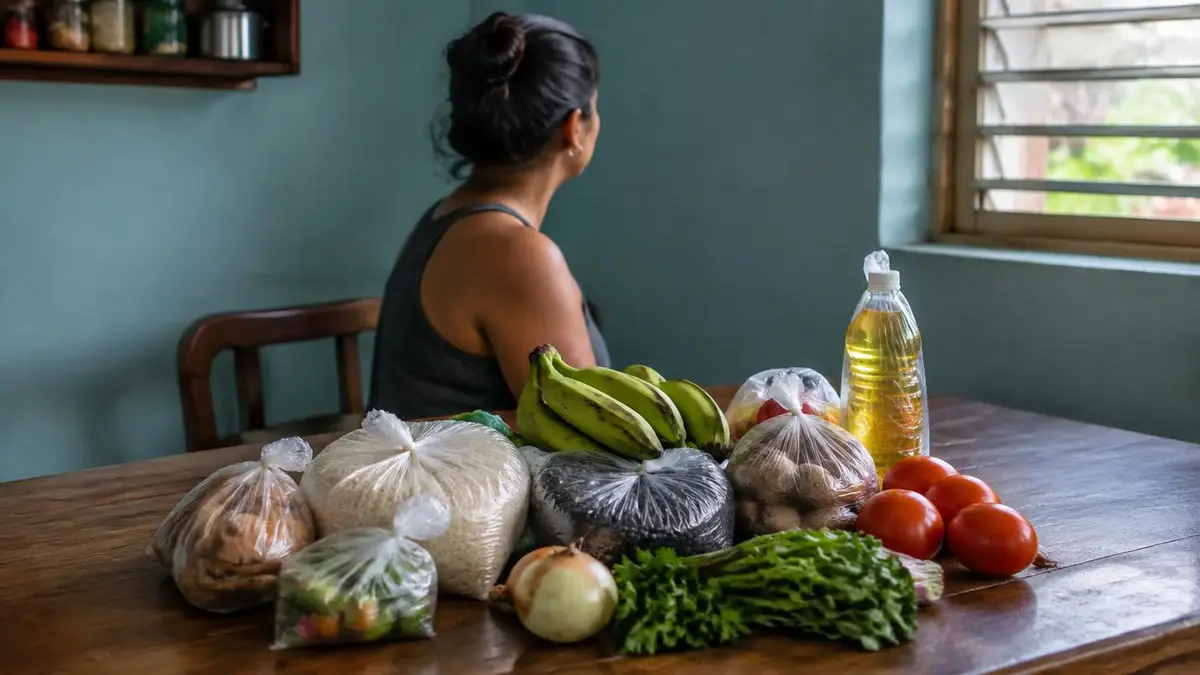
Karla NavOs, a young resident of Baracoa, Guantánamo, shared a Facebook video showing the food she obtained with a budget of 8,500 Cuban pesos, more than the average state salary. On camera, she displayed a purchase consisting of grains, root vegetables and other staples. It included no meat, eggs, milk or oil. She emphasized that despite the money spent on food, she had not been able to buy a main protein dish.
Rice required the largest share of her money: the ten pounds she bought cost 4,100 pesos. She paid 1,950 pesos for three pounds of beans. Together, the grains consumed most of the budget Karla presented, while the remaining money was divided among small quantities of other foods and the bags used to carry them, which cost 20 pesos each, she explained while detailing her expenses on Facebook.
The purchase also included five small heads of garlic for 250 pesos and two pounds of salt for 360. Five pounds of sweet potatoes cost another 400 pesos, while two avocados cost 500. She added a hand of burro bananas, completing the food she showed while explaining what she spent in Baracoa to obtain food and household staples that day.
The distance between the budget and employment income becomes clear when compared with the average monthly state salary of 7,354 pesos reported by ONEI for August 2026. The minimum wage, raised to 3,210 pesos in July, would represent about 40% of the amount she presented. Even if the entire minimum wage were spent on food, it would not cover the purchase shown in Karla's video.
For broader context on everyday expenses, economist Javier Pérez Capdevila estimates that a person needs 96,060 pesos a month to cover basic needs, about 13 average salaries. From another perspective, at an informal exchange rate of 928 pesos per dollar, Karla's 8,500-peso budget equals slightly more than nine U.S. dollars. That equivalence contrasts with the size of the amount in national currency.
The video drew comments about the difficulty of buying food. One user lamented that an amount comparable to a month of work purchased so little. Another said that where they lived, the money would barely buy oil and one kilogram of milk. The person added that another 20 pesos would be needed to buy rice and beans as well, one pound of each, in addition to those two items in their area of the country.