Carbonera: the emergency that also traveled in private cars
A passenger-transport crash left 22 people injured in Matanzas; two were reported in serious condition.
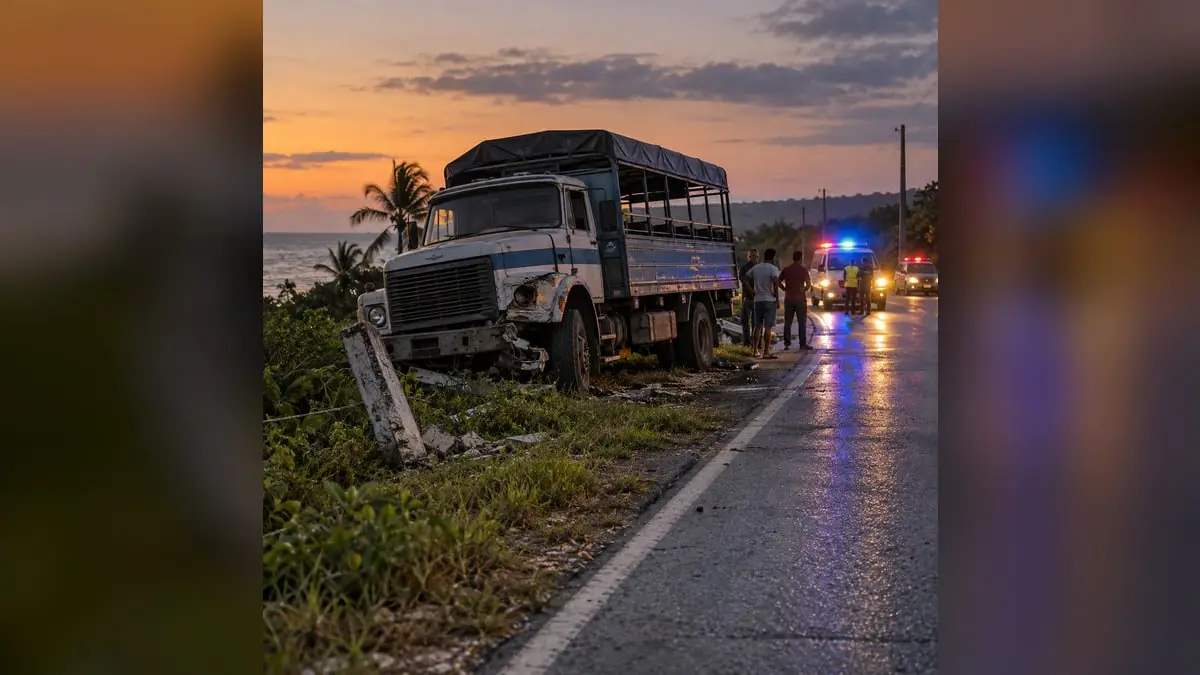
A truck used for passenger transport lost steering control and struck a metal pole on October 23 in Carbonera, a coastal town in Cárdenas municipality, Matanzas. The preliminary health-authority report counted 22 injured people, two in serious condition. No deaths were reported in the first updates.
Provincial Health Director Yamira López García confirmed the number of injured people and where they were treated. The two serious cases were taken to Comandante Faustino Pérez Hernández Teaching Clinical-Surgical Hospital. The other 20 were evaluated and treated at Dr. Mario Muñoz Monroy Provincial Military Teaching Hospital and reported not to be in danger of dying.
The first minutes after the crash also revealed a detail that should not be overlooked. Drivers, passersby and residents helped the victims and transported many in private vehicles. Their solidarity saved time, but reports said this movement occurred because ambulances were not immediately available. What worked as a community response also exposed a weakness in emergency services.
Witnesses quoted on social media attributed the crash to a steering failure. That account is consistent with the initial description but does not replace a technical investigation. Authorities said the causes remained under investigation. Until an official report exists, mechanical failure must be presented as preliminary testimony rather than a proven conclusion.
Carbonera is a small settlement on the coast between the city of Matanzas and Varadero. In communities of that size, distance from hospitals capable of treating multiple trauma patients makes every minute critical. The response depends not only on medical staff but also on available ambulances, communications, fuel, clear roads and coordination among health facilities.
The crashed vehicle again raises questions about the daily use of adapted trucks for passenger transport. In a country with a prolonged mobility crisis and an aging vehicle fleet, many people cannot choose a safer option. Necessity turns provisional solutions into permanent services even though their design, maintenance and safety protections are not equivalent to those of a bus built for passengers.
The investigation should establish the truck's mechanical condition, the date of its last inspection, authorized capacity, actual passenger count and road and signage conditions. It should also clarify emergency response times and how many public vehicles were available. Publishing those facts is not about assigning blame in advance; it helps identify what failed and what can be corrected before another crash.
The medical report also requires follow-up. Saying 20 people were not in danger does not mean their injuries were minor or the case was over. Families need clear updates on recovery, transfers and assistance, while hospitals need enough supplies to handle a mass-casualty event without displacing other emergencies.
Residents and drivers who stopped demonstrated a community's capacity to respond when time is short. That solidarity deserves recognition, but it cannot become the official rescue plan. Safe transportation and an adequate ambulance network are public responsibilities. Carbonera should be remembered not only for those who helped, but for the decisions made so the next emergency does not depend on who happens to be passing on the road.