Without fuel, there is no shortcut
The government acknowledges Cuba will not have fuel in the short term while the electrical system continues operating with an extreme deficit.
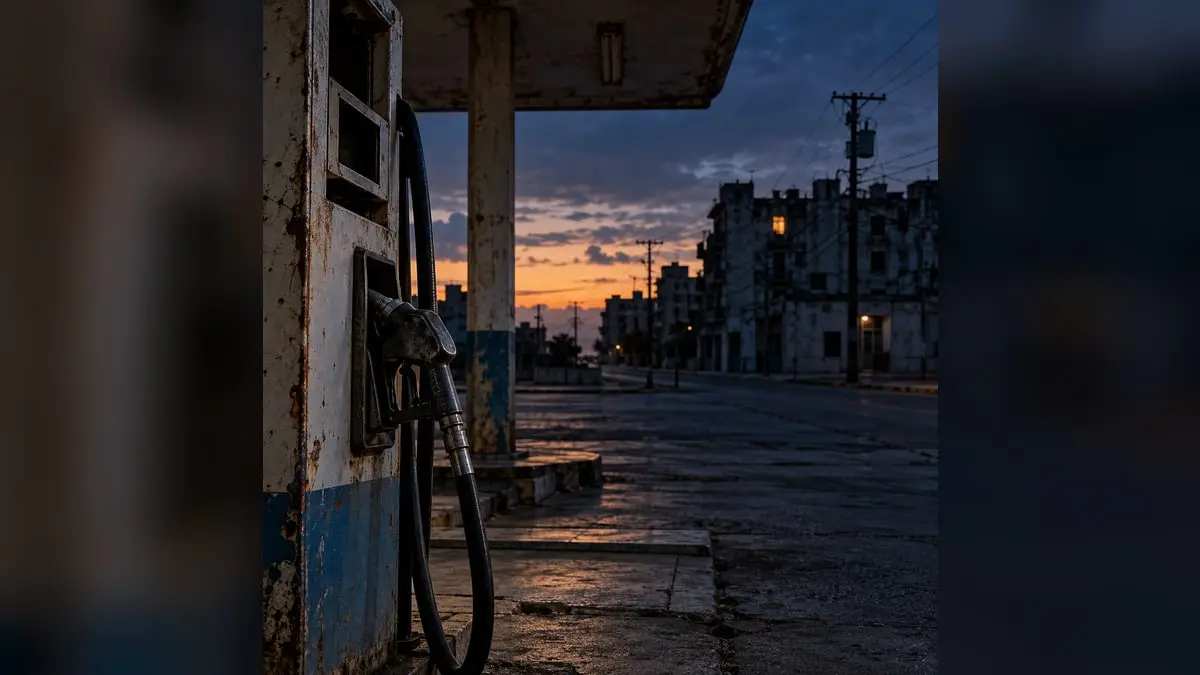
Energy and Mines Minister Vicente de la O Levy's warning removes any basis for presenting the fuel shortage as brief. During a working visit to Holguín, he acknowledged that Cuba neither has nor will have fuel in the short term. His message included a call for local solutions, but the problem he described far exceeds the capacity of one workshop or province.
In Holguín, the minister proposed greater collaboration between state and private companies to create repair workshops and recover electrical-system equipment. He also mentioned better use of renewable sources such as hydropower, wind and biomass. These are reasonable lines of work, but none immediately produces missing fuel or replaces thermal units out of service.
The meeting itself provided a precise image of accumulated deterioration. Distributed-generation managers said some sites have gone two or three years without producing electricity, mainly because of fuel difficulties. Concentrating available equipment at fewer installations seeks easier supply and greater efficiency. Abundance is no longer being organized; shrinking capacity is being managed.
October 23 figures show the national scale. For peak demand, the Electric Union estimated 2,850 MW of demand against only 1,030 MW available. The projected deficit was 1,820 MW and disruption could reach 1,850 MW. At 6 a.m., 1,280 MW of disruption was already reported after a full day of outages caused by insufficient capacity.
Fuel scarcity coincided with failures at Santa Cruz, Felton and Renté units and maintenance at Mariel, Nuevitas and other units at those plants. Thermal limitations reached 453 MW. Solar generation provided 3,980 MWh the previous day and reached 619 MW at midday, a meaningful contribution that, without enough storage and stable backup, does not cover nighttime demand.
Saying there is no fuel while asking each territory to find its own solution risks shifting responsibility to people who do not control imports, foreign currency or energy policy. Workers can repair engines and recover parts; they cannot create crude oil, finance international purchases or replace decades of deferred investment.
Households pay the cost of that gap. A prolonged outage interrupts water pumping, spoils food, stops small businesses, hinders transportation and turns home medical care into an emergency. For a family, 1,850 MW is not a technical figure: it is hours without ventilation or refrigeration and without knowing when service will return.
Cuba needs an energy report allowing verification of priorities, fuel availability, each unit's actual state and recovery dates. It also needs public rules for allocating scarce electricity among hospitals, water, production and homes. Without those data, citizens receive only calls to endure and fragmented explanations.
There is no shortcut between acknowledging fuel scarcity and providing stable electricity. Repair workshops, renewables and better distributed generation can help, but a solution requires measurable planning, financing, maintenance and transparency. Until that happens, managing scarcity will remain another way of managing the blackout.