Russian diesel with an uncertain destination: Cuba remains only a hypothesis
Agioi Fanendes left Primorsk with a reported 40,000-ton cargo and New York as its declared destination. It now has no confirmed discharge port, and there is no evidence the fuel was assigned to Cuba.
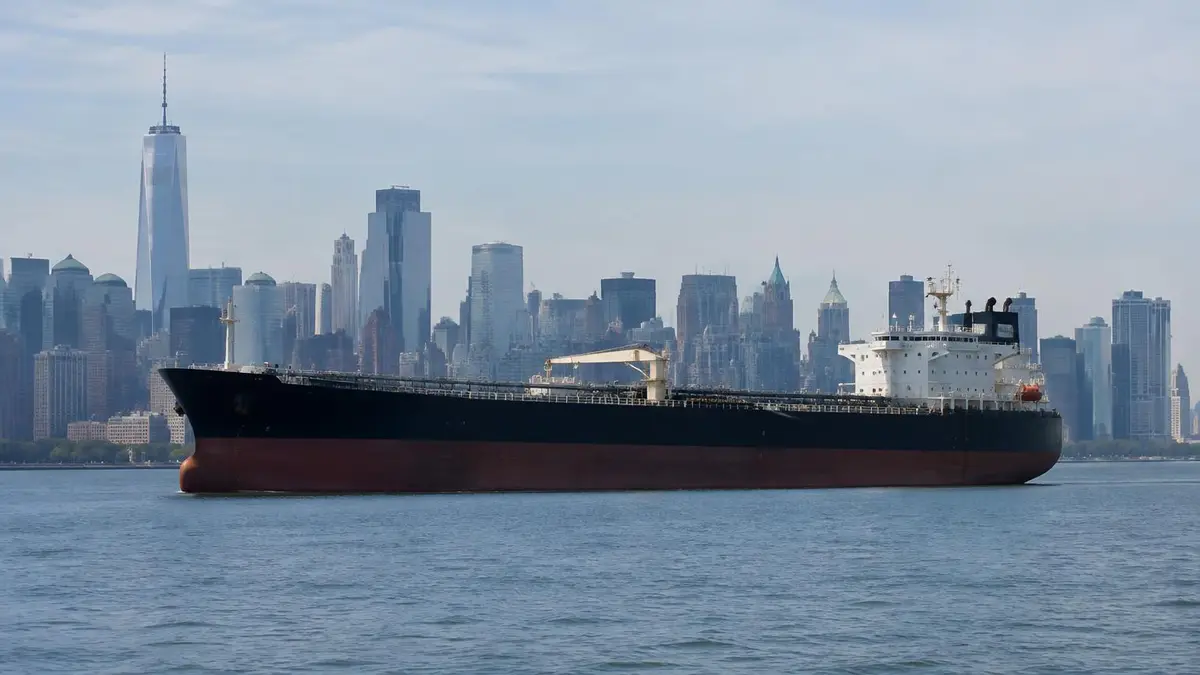
The most solid fact about Agioi Fanendes is that it sailed from Primorsk, Russia, on October 22 with an estimated 40,000-ton cargo of diesel. New York appeared as the declared destination when the voyage began. The later situation is different: available reports indicate that the vessel no longer has a confirmed discharge port, so its arrival point cannot yet be established.
The difference between the destination listed at departure and the current discharge point is crucial to interpreting the case. The information does not confirm that the ship reached New York and does not establish its next stop. It also identifies no buyer for the fuel. Without those elements, an initial route is not enough to determine who will receive the cargo or where it will end up.
Cuba appears in the analysis as a possible alternative precisely because the destination is undefined. That mention is not a commercial assignment and does not demonstrate that the tanker is sailing toward the island. The available information does not establish a change of course for that purpose. Presenting the hypothesis as an agreed delivery would treat an open question as settled.
Discussion of the possible destination relies partly on journalistic analysis of the vessel's movements. OilPrice.com raised the possibility of a redirection and, according to available reports, cited data from Lloyd's List, Kpler and gCaptain. That context explains the origin of the speculation but does not replace confirmation from the shipowner, buyer or a receiving port.
Information about the vessel's operating identity also does not clarify the cargo's destination. Agioi Fanendes sails under the Maltese flag and is listed as managed by Eastern Mediterranean Maritime, a Greek shipping company. Those facts help describe who is associated with the ship but do not establish who controls the diesel commercially or which entity will receive it.
A Democratic senator has also reportedly demanded that the vessel turn around. That request expresses a political position toward the voyage but does not show that the crew changed its itinerary. It also establishes no alternate port and does not confirm whether the cargo will remain in the United States, be redirected to another market or end up in Cuba.
The absence of a confirmed discharge point leaves several practical questions unanswered: whether a new destination will be declared, who will make that decision and when it will become known. Until information resolves those points, the cargo's effect on the market where it eventually arrives cannot be calculated. The uncertainty does not support anticipating a delivery or its consequences.
For now, what can be verified is limited: the vessel left Primorsk with New York as its declared destination and later had no confirmed discharge port. Cuba is a possibility mentioned in analysis, not a proven destination. Caution does not diminish the cargo's importance; it avoids assigning the island an amount of fuel whose allocation, receipt and final route have not been established.