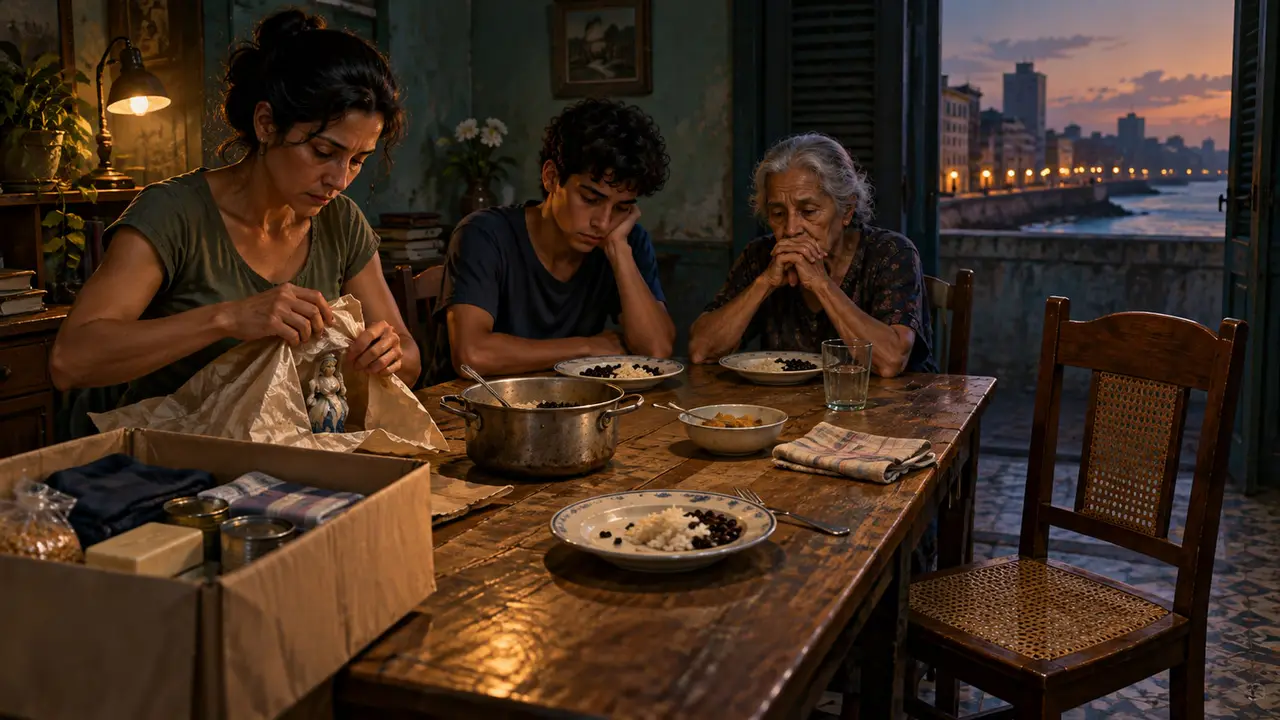
Seven hundred fifty tons of oil ease the shortage; they do not explain it
The shipment sent by Russia may meet immediate needs, but it again shows a food supply dependent on external agreements and extraordinary deliveries.
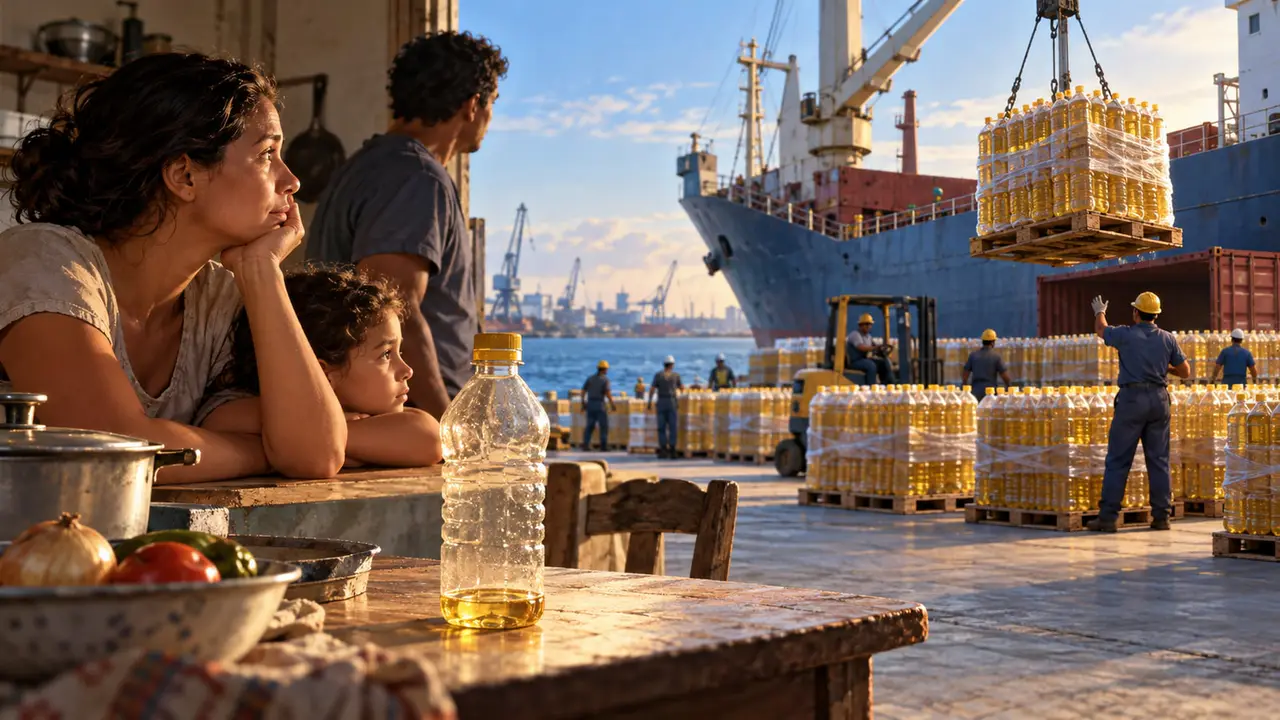
New food assistance channeled through the World Food Programme adds more than 750 metric tons of sunflower-derived vegetable oil to its reserves in Cuba. The shipment was presented in Havana and is intended for vulnerable groups. The announcement confirms the arrival of a specific supply; by itself, it does not show how much demand it will cover or for how long.
The product was refined and fortified with vitamins A and D. The information describes it as a Russian contribution to the UN program, transported by that country’s emergency ministry. That institutional route matters because it places the delivery within an assistance operation, not a commercial sale or a directly detailed distribution to the public.
The ceremony took place at a Havana storage facility and brought Cuban foreign and domestic trade officials together with the WFP representative on the island, Etienne. Attendees included Deputy Prime Minister Óscar Pérez-Oliva Fraga and Minister Betsy Díaz Velázquez. Their presence gives the event official visibility but does not explain the later steps between the warehouse and recipient households.
Children, older adults and pregnant women are identified among those expected to receive support. Published data do not specify the distribution schedule, the amount assigned to each person or the selection criteria. That absence limits assessment of the practical reach: tonnage describes the shipment’s scale, while its impact will depend on how it is divided, transported and delivered.
Russian contributions to the program for Cuba are also reported to exceed $15 million since 2018. That figure represents 32% of the $57.9 million implemented by the agency on the island during the cycle cited in the report. It is a cumulative cooperation total, distinct from the size of this shipment; the material does not precisely define the reference cycle.
The two measures should not be confused: the cumulative value of contributions does not establish the price of the current shipment, and physical volume is not a measure of food coverage. Interpreting both figures requires additional data about actual beneficiaries, delivery frequency and available stocks. Without them, any estimate of the relief each family will receive would be speculative.
The assistance can address immediate needs, but its announcement does not explain why regular supply continues to depend on external contributions. Nor is there enough information here to attribute shortages to a single cause or measure this shipment against national consumption. Evaluation should distinguish the humanitarian value of a donation from the broader analysis of food security.
Public follow-up should show when distribution begins, which local agencies participate and how delivery to priority groups is verified. Those answers would move the discussion from a ceremony and announced volume to accountability for results. International cooperation provides a tangible resource; stable supply requires continuity and data by which it can be judged.