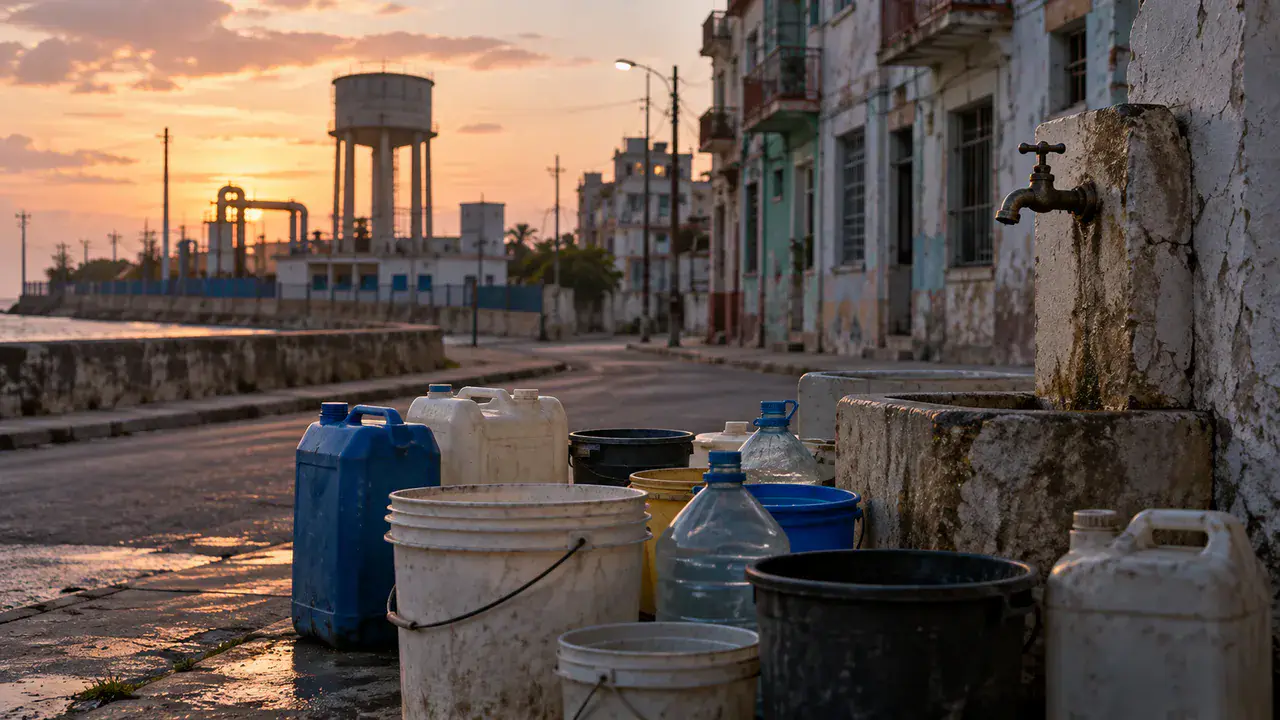
When the power goes out, the water tanks also empty
More than 2.6 million Cubans faced water-supply disruption and 1.8 million were directly affected by electrical failures. The crisis shows that electricity and water can no longer be managed as separate problems.
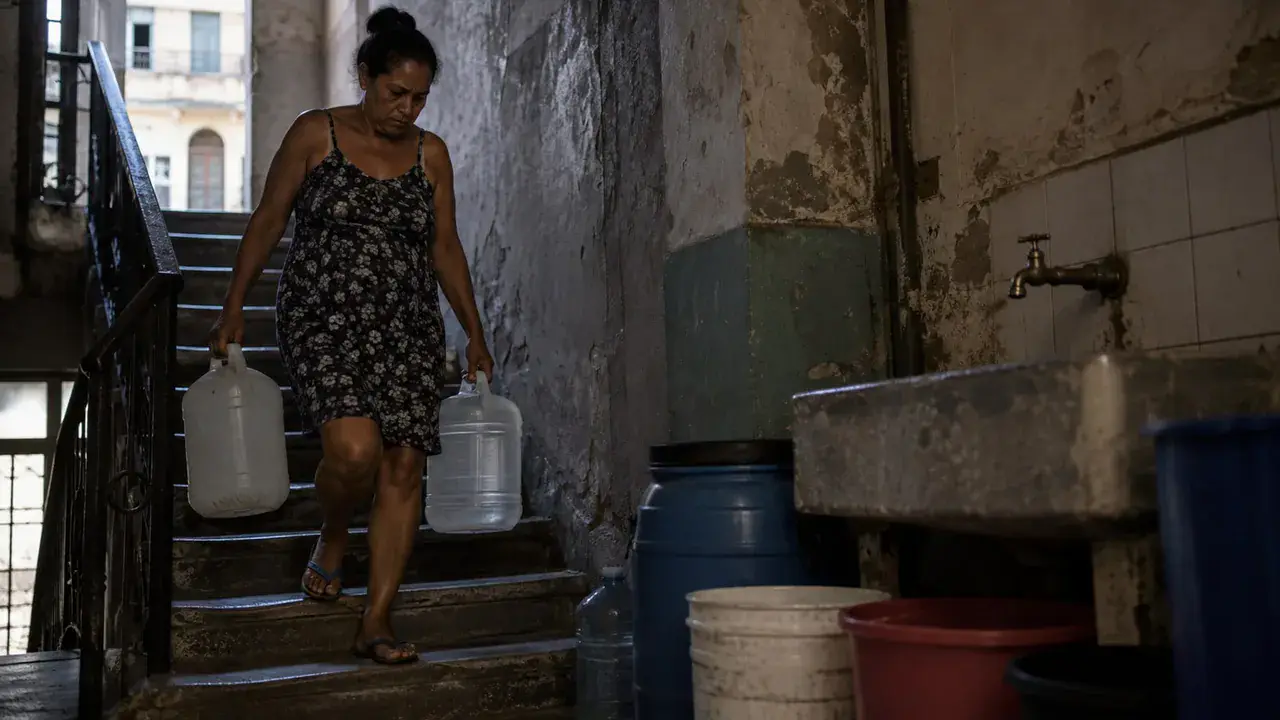
A lack of electricity no longer ends when a light goes out. In Cuba it also stops pumps, reduces network pressure and leaves entire communities without water. Reports from the National Institute of Hydraulic Resources for October 27 and 28 placed the number of residents with partial or total service disruption above 2.6 million.
The most revealing fact is not only the scale but the cause. INRH attributed harm affecting 1.8 million people, 68 percent of those with water difficulties, to electrical problems. Pump-equipment failures completed much of the picture: blackouts and breakdowns together accounted for nearly 90 percent of disruptions.
That chain turns an energy crisis into a health crisis. Without regular water, drinking, cooking, hygiene, cleaning and care for ill people become harder. The interruption also does not necessarily end when power returns. An empty network must regain pressure; short electricity cycles may not be long enough to pump, fill tanks and distribute service to distant areas.
The vulnerability is structural. According to sector data, more than 85 percent of hydraulic infrastructure depends on electricity. A single motor out of operation can affect 4,000 to 6,000 people. A local failure can therefore grow quickly into a municipal problem, and a prolonged blackout can create delays continuing after reconnection.
Matanzas, Havana, Holguín, Artemisa and Pinar del Río accounted for 56 percent of disruptions. About 265,000 affected residents were reported in Matanzas. Those figures require more than a national bulletin: every territory should publish which sources are stopped, how many people depend on them, the last distribution and the planned alternative.
Solar pumping offers a concrete path, though still insufficient. INRH reported 853 installed systems benefiting about 498,000 people. The figure proves that dependence on the national grid can be reduced at certain points but also shows the distance between existing projects and the problem's scale. Not every source can be solarized the same way, and no technology replaces maintenance of mains, motors and networks.
The public response should be organized around continuity of service, not isolated announcements. Hospitals, schools, nursing homes and communities with bedridden residents need verifiable priorities. Pumping and tanker-delivery schedules should be accessible, and interruptions should be communicated before a family discovers the cutoff by opening a faucet.
Quality must also be measured, not only the presence of water. Intermittent service increases contamination risk through pressure loss, prolonged storage or unsuitable containers. Information about chlorination, tank cleaning and safety conditions should form part of the same report counting motors and megawatts.
Cuba is not facing two parallel emergencies. It faces interdependent infrastructure in which electricity sustains water and water sustains health. Recognizing that relationship changes the question: it is not enough to say when power returns; authorities must explain when water returns, at what quality and for how long.