Leprosy does not call for fear: it calls for early diagnosis and zero stigma
Cuba reported 124 new cases in 2025, half of them in Santiago de Cuba and Guantánamo. The disease is curable; the challenge is early detection, treatment and zero social punishment for a diagnosis.
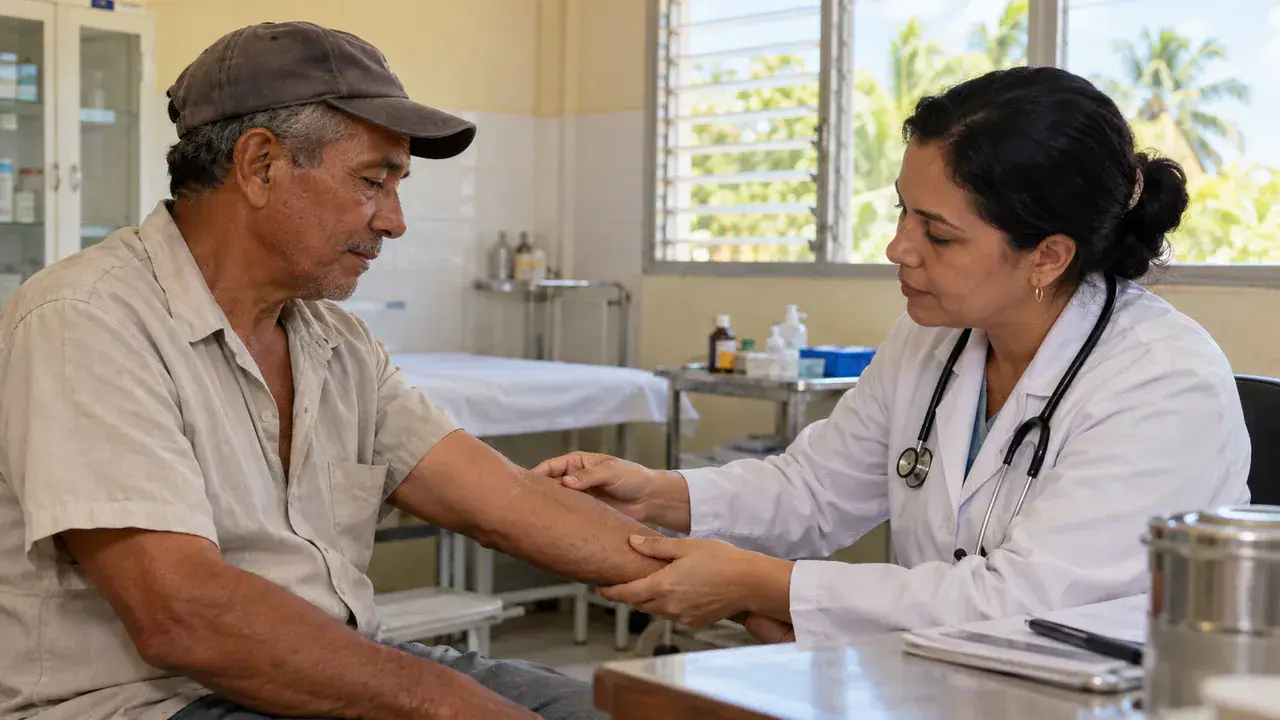
Cuba recorded 124 new cases of leprosy in 2025, according to the Statistical Health Yearbook published by the Ministry of Public Health. Santiago de Cuba reported 40 and Guantánamo 22: together they accounted for exactly half the national total. The figure deserves public-health attention, not alarm or discrimination.
The geographic distribution helps determine where active case finding and diagnosis should be strengthened. Santiago de Cuba had a rate of 4.2 cases per 100,000 people and Guantánamo 4.8. The Isle of Youth recorded only four cases but had the country's highest rate, 5.5 per 100,000, because of its smaller population.
The yearbook classifies 113 of the 124 diagnoses as multibacillary and 11 as paucibacillary. Classification guides the duration of treatment. The World Health Organization recommends multidrug therapy for 12 months in multibacillary cases and six months in paucibacillary cases. The disease is curable in both groups.
The word leprosy still carries centuries of fear. That cultural weight can cause greater harm when it leads a person to hide a patch of skin with reduced sensation, delay a consultation or fear exclusion from family and work. The WHO explains that transmission requires close and frequent contact with an untreated person. It does not occur through a handshake, a hug, sharing food or sitting beside someone.
Treatment also changes the risk of transmission. Once the appropriate regimen begins, the patient stops transmitting the disease. Early detection also reduces the possibility of permanent peripheral nerve damage, which can cause loss of sensation, weakness and disability if care arrives late.
The figures therefore should not become a label for eastern Cuba. They should activate a concrete response: training primary-care personnel, ensuring medication availability, following close contacts and providing clear referral pathways. Surveillance works best when a community recognizes signs without turning them into grounds for exclusion.
Cuba eliminated leprosy as a public-health problem in 1993 by reducing prevalence below one case per 10,000 people. That definition does not mean eradication or an absolute absence of diagnoses. The country continued reporting cases each year. Confusing elimination with disappearance can weaken surveillance; confusing new cases with an epidemic can fuel panic.
Official communication should publish comparable series, explain the difference between incidence and prevalence and detail diagnostic and treatment capacity by province. It should also report on contact tracing and any supply interruptions. Silence leaves room for rumors; a number without context can stigmatize patients and territories.
The correct public-health goal has two inseparable parts: interrupt transmission and protect dignity. A person who receives a diagnosis should be offered treatment, information and support, not social isolation. Leprosy is curable. Fear and discrimination, by contrast, can prevent care from arriving on time.