Florida against the tide: the United States punished Trumpism, but the state again elected Republicans
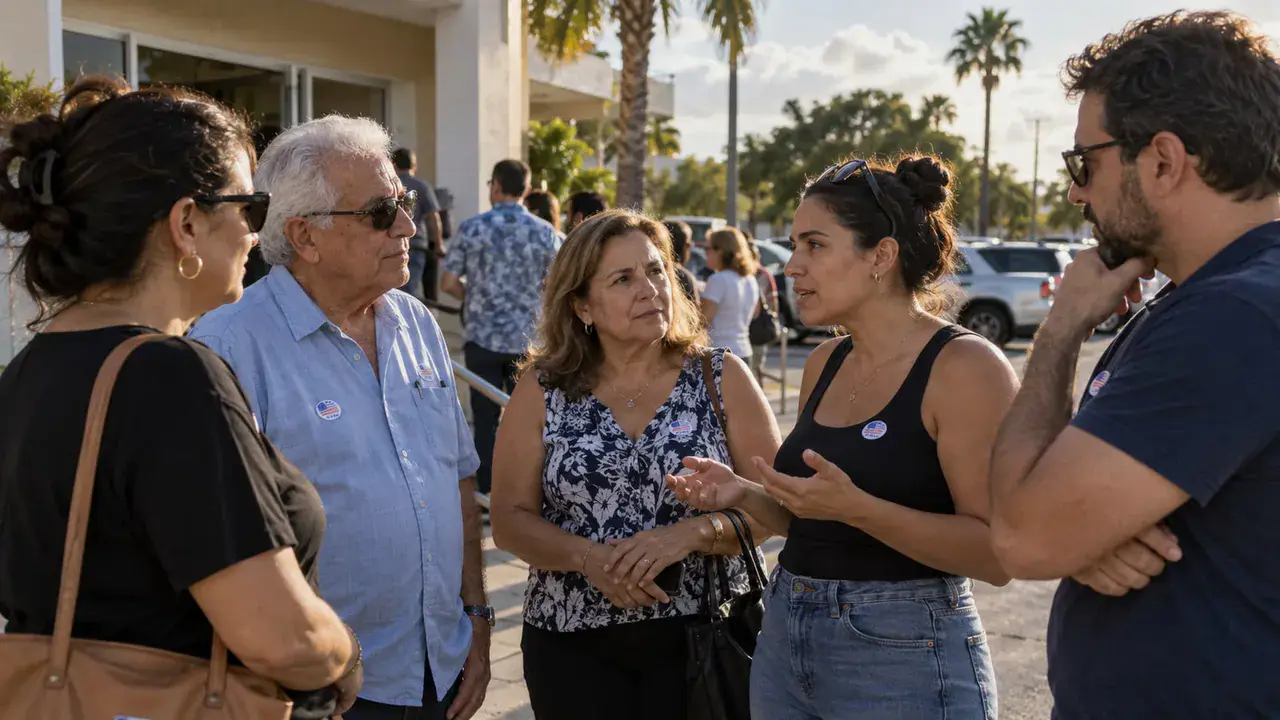
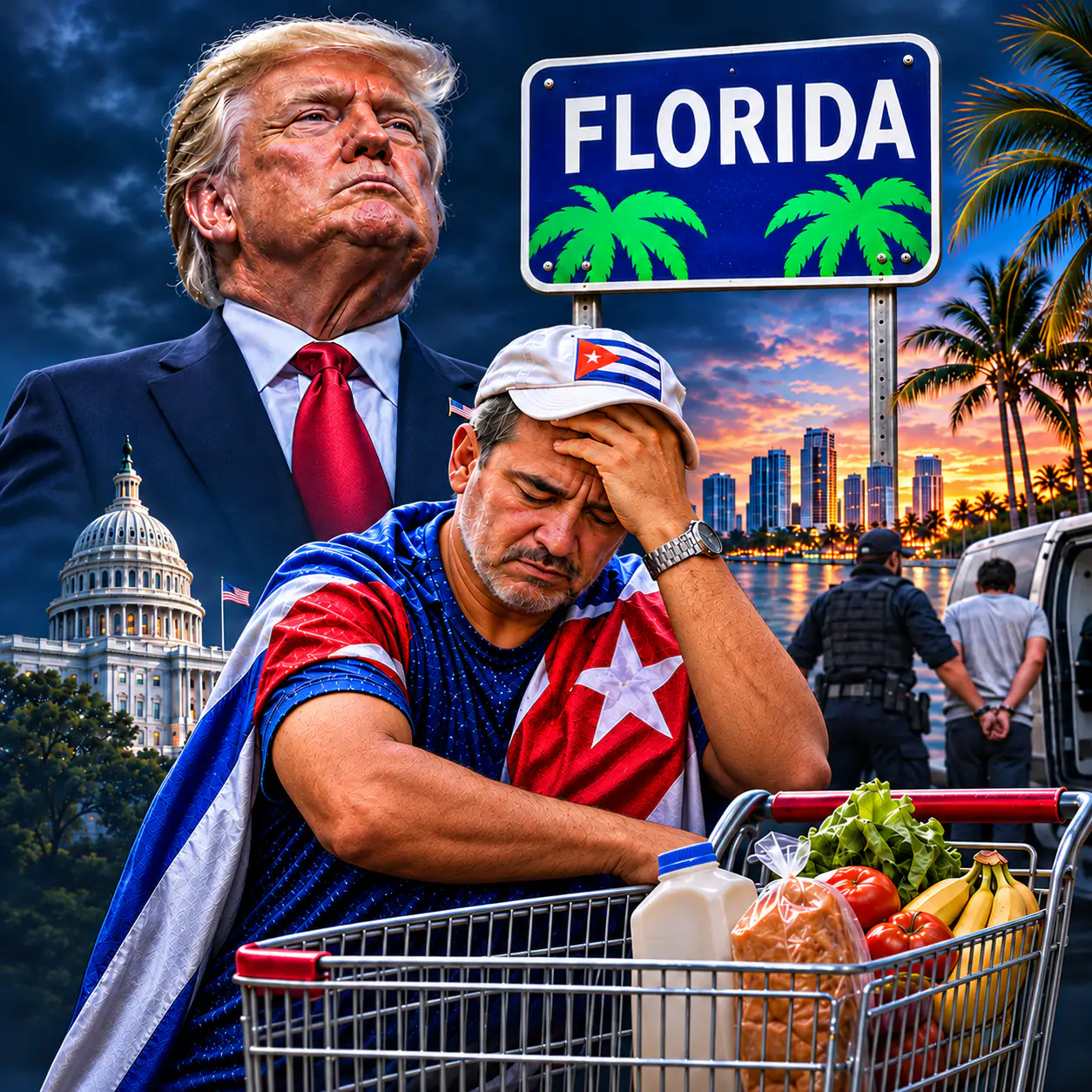
While a Democratic wave took control of Congress from Republicans, Florida again elected Republicans. Neither gasoline above four dollars, immigration policy nor social-program cuts prevented conservative victories. The Cuban American vote exposed a key contradiction for understanding the result.
A country that changed direction and a Florida that again elected Republicans
The United States awoke on November 4 to a decisive political result: Democrats had regained control of the House of Representatives and the Senate.
The midterm election became a setback for President Donald Trump and his party. Democrats won even in traditionally conservative territory, while concerns about the economy, the cost of living, the war with Iran and Washington's policies weighed on the decisions of many voters.
According to a Reuters analysis, Republicans lost vote share compared with Trump in 2024 in 99% of approximately 2,100 counties examined. The losses also reached majority-Hispanic counties.
And yet Florida again chose Republican governments.
Byron Donalds won the governorship. Ashley Moody retained Florida's seat in the U.S. Senate. Republicans also prevailed in the state's other leading offices.
A state that had been decisive in numerous national elections once again moved in a different direction from much of the country.
Why did Florida continue to support the governing party when so many Americans decided to withdraw their support?
The answer deserves far more than simply repeating that Florida is a Republican state.
Gasoline, inflation and household finances: problems do not disappear with a speech
For years, politicians have promised prosperity, lower prices and relief for families.
But a campaign promise does not pay for fuel, automatically lower the rent or cover a medical bill.
On November 2, 2026, just one day before the election, the national average for regular gasoline stood at $4.15 per gallon, according to the U.S. Energy Information Administration.
A week earlier it had reached $4.27.
Although the price had fallen from October, it still represented a considerable expense for millions of workers.
And the problem went beyond the gas tank.
In September, year-over-year inflation reached 3.7%, according to the Bureau of Labor Statistics. During that month alone, the gasoline price index rose 9.1%.
It is important to recognize that fuel prices also depend on the international market, oil production and geopolitical conflicts. No president controls all those factors alone.
But that reality does not eliminate a fundamental responsibility of any administration: to explain its economic decisions and answer for the consequences citizens experience.
In Florida, where a car is essential for much of the population, fuel and housing prices directly affect household finances.
And while the campaign filled with speeches about prosperity, thousands of families kept calculating how much money remained after paying rent, groceries, insurance and gasoline.
Political propaganda can change the subject. The grocery bill cannot.
Medicaid and food assistance: the consequences behind speeches about cutting spending
One of the most important debates under the Trump administration has concerned reductions in federal spending.
Supporters of those measures argue that they help control public finances, reduce the deficit and establish new conditions for access to certain benefits.
But the true scope of a public policy must also be assessed through its consequences.
The federal budget law approved in July 2025 introduced major changes to Medicaid and food-assistance programs.
In its 2026 budget analysis, the Congressional Budget Office estimated that those changes would reduce projected federal Medicaid spending by approximately $1.2 trillion between 2026 and 2035 and lower enrollment in the program by about 13.1 million people by 2035.
It also estimated a reduction of approximately $211 billion in projected SNAP spending, the food-assistance program, over the same period.
These figures are cumulative projections, not people who had automatically lost their coverage or benefits in November 2026.
But they raise questions that should not disappear after the election.
What happens to a family that loses its health insurance? How does an older person respond to new administrative requirements? What alternatives will a household have when its food budget is already insufficient?
The discussion cannot be reduced to calling every decrease in public spending a saving.
It is also necessary to explain who will bear the consequences.
Cubans in Florida: an electoral contradiction that deserves an explanation
One of the most revealing facts of this election did not emerge on November 3, but several days earlier.
Florida International University's 2026 Cuba Poll, conducted among 1,004 Cuban American adults in Miami-Dade, found that 76% opposed increased deportations of Cubans without legal status and without criminal records.
Even among Republican respondents, 63% disapproved of those deportations.
Nevertheless, 68% of the sample said they would vote for Republican candidates.
It bears emphasizing: this was a preelection survey of voting intention, not a final result from the ballot box.
Even so, the contrast is extraordinarily significant.
How can so many respondents reject an immigration policy while continuing to support the party leading the administration responsible for carrying it out?
The answer is not necessarily hypocrisy. People may support a party for economic, religious, security or foreign-policy reasons, or because of their personal experiences with the Cuban regime, while disagreeing with specific decisions by that same party.
But recognizing that complexity does not mean their leaders should be free from scrutiny.
Many Cubans emigrated precisely because they did not want to live under a system in which criticism of those in power was treated as disloyalty.
That historical experience should make the principle of demanding explanations from every government especially important, regardless of the party in power.
A community can maintain its convictions while also demanding that its representatives answer for policies affecting its own families.
Deportations to Africa: a policy that requires a conversation about human rights
The Trump administration's immigration controversies have extended far beyond the usual debates about border security.
A report published by Human Rights Watch on October 8, 2026, documented the expulsion of people from the United States to African countries other than their countries of origin.
According to the organization, ICE data recorded more than 500 expulsions of people of various nationalities to third countries in Africa between January 2025 and August 2026.
The report included accounts from people transported under severe physical restraints, given insufficient information about their destination and, in some cases, later subjected to detention and mistreatment.
Cuban citizens were among the nationalities affected.
This is not to claim that every deportation is illegal. The United States has the authority to enforce its immigration laws, which include procedures for removing people who meet certain legal criteria.
The issue is different: enforcing the law does not eliminate the obligation to respect due process and fundamental rights.
It is legitimate to ask what safeguards are provided when a person is sent to a country with which they have no ties.
It is also legitimate to demand that representatives of the affected communities explain what steps they have taken in response to these cases.
Because the consequences of a deportation do not end when an airplane takes off.
They continue through separated families, detained people and court proceedings that have yet to be resolved.
Miami is not politically uniform, and the ballot box proved it
It would be a mistake to make Florida's entire Cuban community responsible for a single political position.
Not all Cubans vote Republican. Nor does every Republican support every Trump decision.
South Florida's results revealed a far more competitive electorate than it appeared to be after the decisive conservative victories of 2022 and 2024.
In District FL-26, Mario Díaz-Balart faced a close race against Nicole Locklin. In FL-27, María Elvira Salazar also had to defend her seat in a tightly contested race against Eliott Rodríguez.
In the statewide Senate election, preliminary official results showed Angie Nixon defeating Ashley Moody in Miami-Dade by more than 54,000 votes.
That demonstrates that the county's voters do not act as a homogeneous bloc.
It also reveals a reality the parties should examine: talking about Cuba is no substitute for offering concrete answers on housing, the economy, health care or immigration.
The concerns of younger generations of Cuban Americans do not necessarily match those of people who arrived decades ago.
And representing a community also means listening to those who disagree.
Florida remained Republican, but it was no longer the Florida of 2022
One fact prevents the result from being interpreted as an unquestionable conservative victory.
In 2022, Ron DeSantis won the governorship by approximately 19.4 percentage points.
In 2026, Byron Donalds received 50.08% to David Jolly's 48.66%.
The margin was 1.42 points, or about 116,737 votes, according to the preliminary Florida results available at the close of this edition.
The shift in the margin between the two parties was approximately 18 points compared with 2022.
Republicans retained the governorship but lost much of the advantage they had held four years earlier.
Something similar occurred in other statewide races.
Ashley Moody's victory over Angie Nixon was approximately three percentage points.
That is not a minor detail.
Florida has a considerable Republican advantage in voter registration. State data available for 2026 showed approximately 5.61 million registered Republicans compared with 4.07 million Democrats.
The difference exceeded 1.5 million registered voters.
That partisan structure helps explain why Republicans were able to retain major offices even in a nationally adverse election.
But it also shows the scale of the Democratic recovery: despite a considerable registration disadvantage, the party came close to victory in several top-level contests.
A one-point victory does not mean the same thing as a twenty-point victory.
The uncomfortable lesson: no political identity should become a blank check
The 2026 elections offer an opportunity to examine the extent to which partisan loyalties influence the assessment of public policy.
This is particularly relevant in communities that have experienced authoritarianism.
Defending freedom means more than rejecting a foreign dictatorship.
It also requires maintaining independent judgment toward the leaders of a democracy.
Criticizing Fidel Castro and supporting certain Donald Trump policies are not necessarily contradictory positions. Cuba and the United States have profoundly different institutions and political systems.
But defending freedom of expression while rejecting scrutiny of political leaders does present a conflict of principles, regardless of the party or the country.
The same is true when human-rights abuses in Cuba are condemned while documented allegations against U.S. authorities are left unexamined.
Fundamental rights should not depend on the nationality of the person affected or on political sympathy for whoever governs.
This is a conversation Florida needs to have without caricaturing its voters.
Those who supported Republicans have reasons that deserve to be heard. So do those who voted for Democrats.
And all of them have the right to demand that policies be judged by their results.
Florida after the blue wave: the questions remain open
Democrats won control of the national Congress.
Republicans retained state power in Florida.
Both things are true.
It is also true that the state shifted considerably toward Democrats compared with the previous midterm elections.
Donalds' victory does not eliminate concerns about housing, insurance, inflation or immigration policies.
Jolly's defeat does not erase the nearly four million people who voted for him.
Likewise, Republican victories in Florida do not invalidate the political message that millions of Americans expressed in other states.
The result leaves an obligation for those who govern: to answer for their decisions and demonstrate that their proposals can improve people's living conditions.
And it leaves another for citizens: not to turn support for a party into a permanent surrender of their right to question it.
Because no election, regardless of whether the victory is broad or narrow, should end the fundamental question of who answers when political promises collide with the reality of families.
Florida chose Republican continuity. The United States chose a Democratic Congress.
Now both will have to live with the consequences of their decisions.
And voters will have the right to demand answers, not merely new speeches.
Editorial article based on preliminary results from November 3, 2026. Election figures may be updated until certification.